Places of interest — Visit Riparbella
The town of Riparbella
Art · Craft · Memory

Places
of interest.

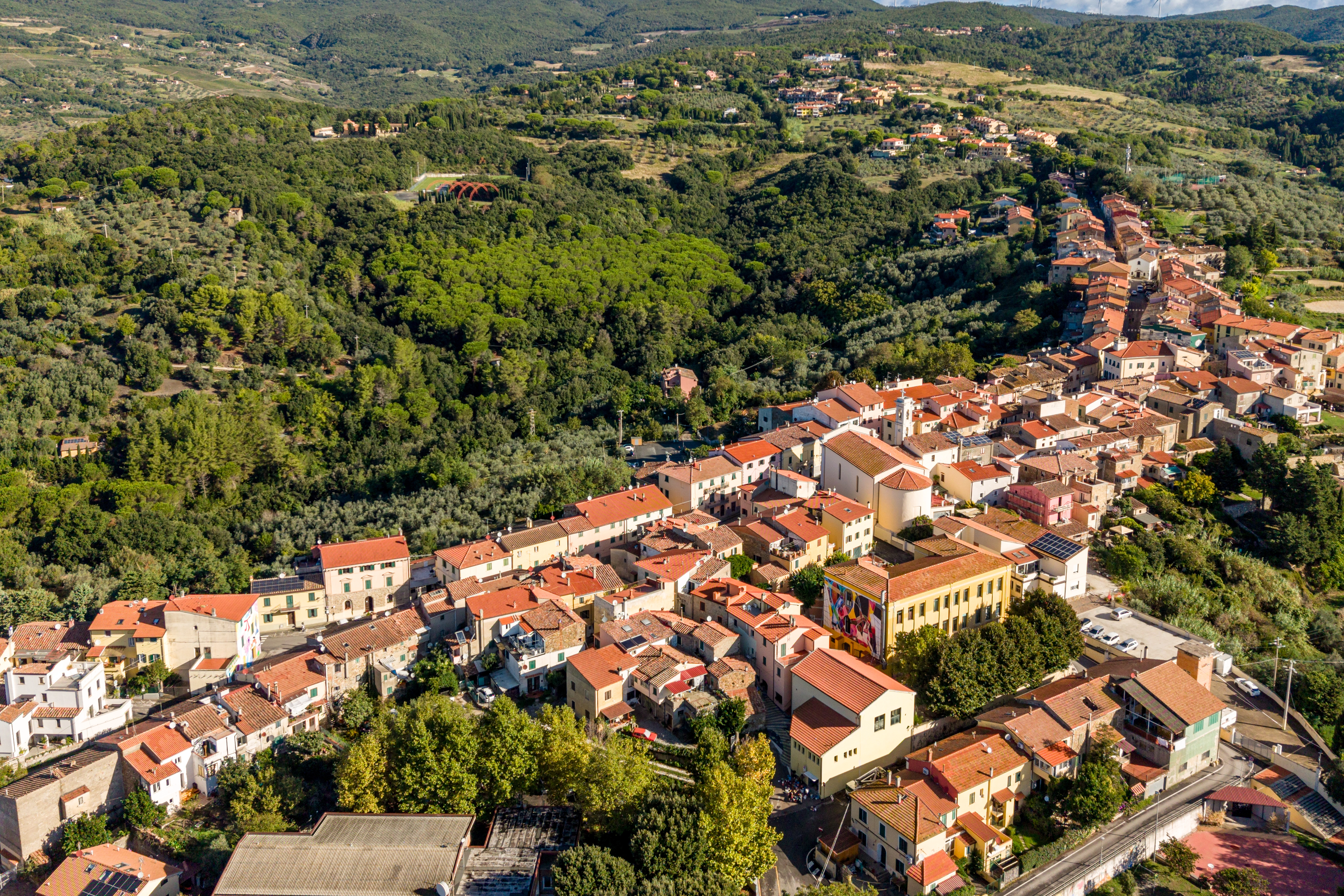
Riparbella is not only about nature. It is a town that tells its story through the art spread across its squares, the contemporary craftsmanship of its workshops and the memory held in its architecture.

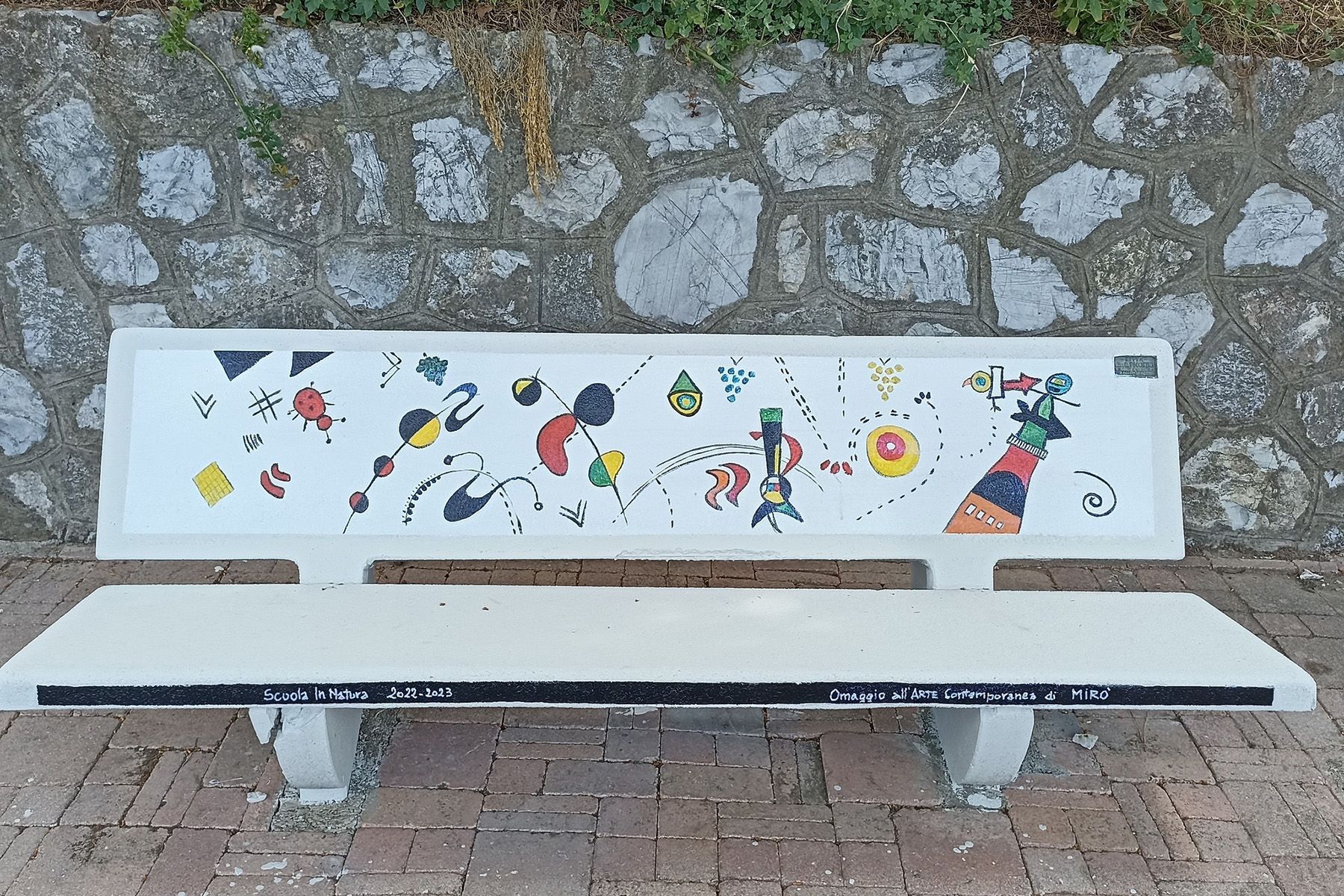
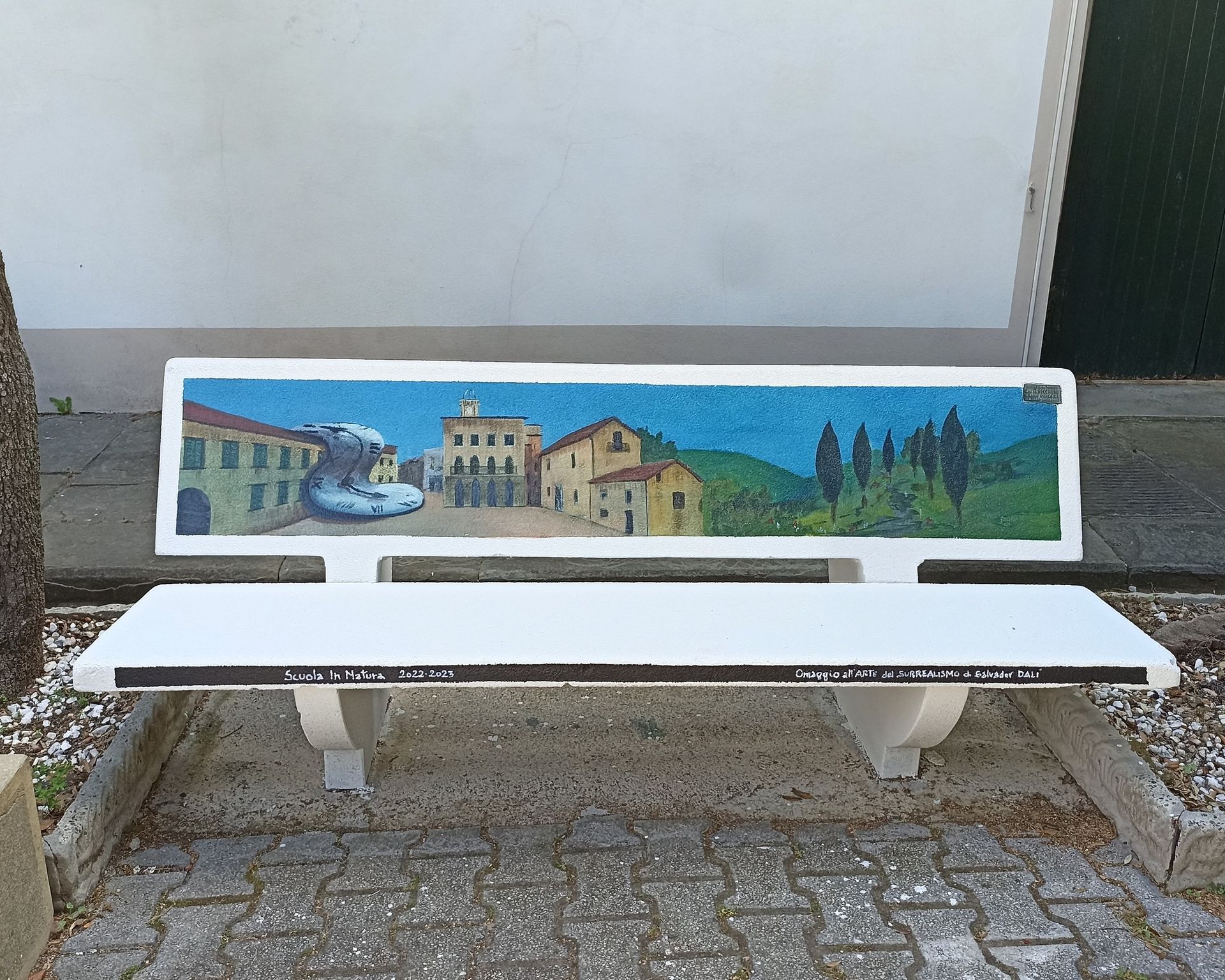
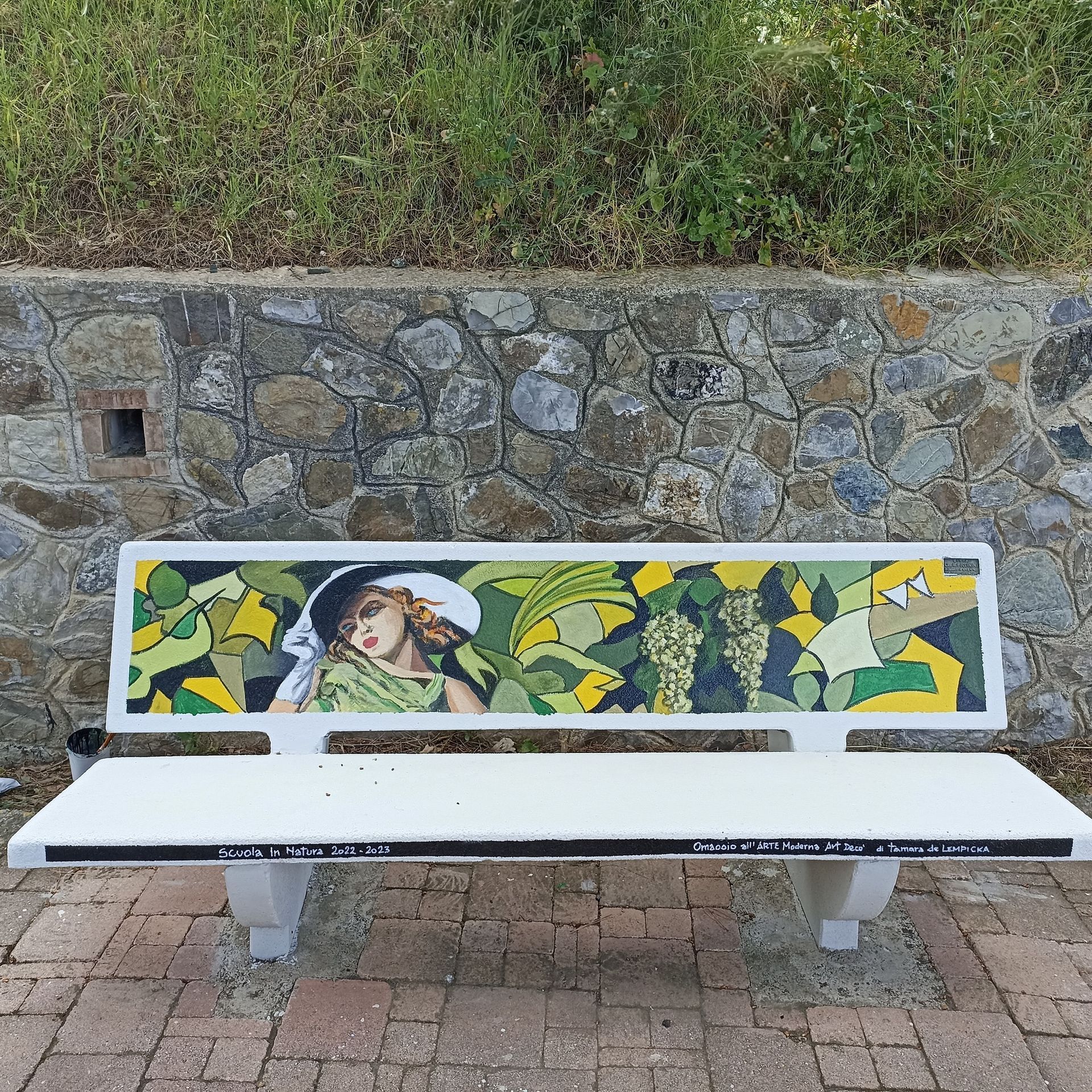
~20 Artist benches
17 Places described
1502 The oldest oratory
1894 Monumental cemetery

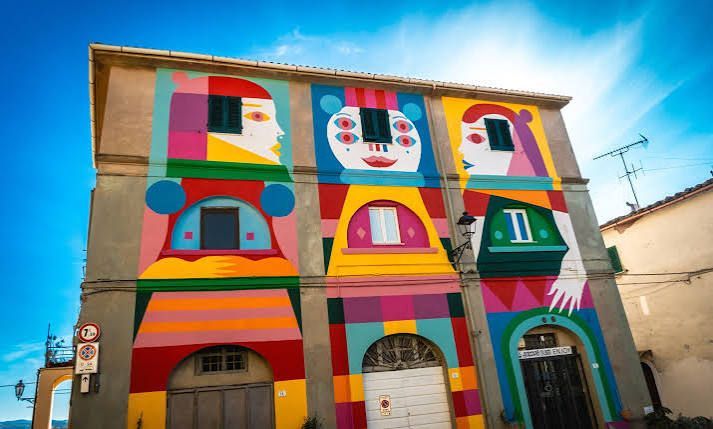
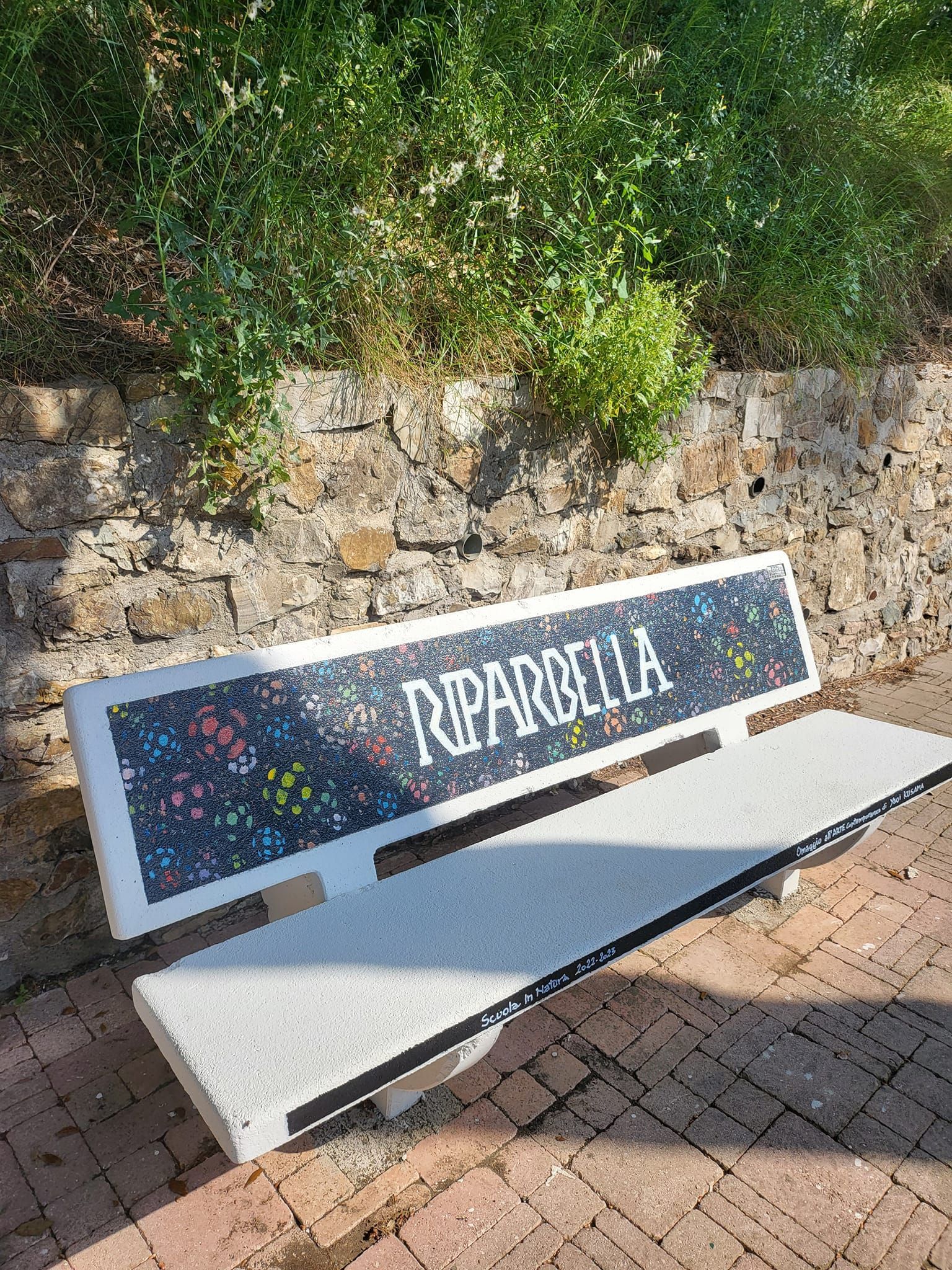
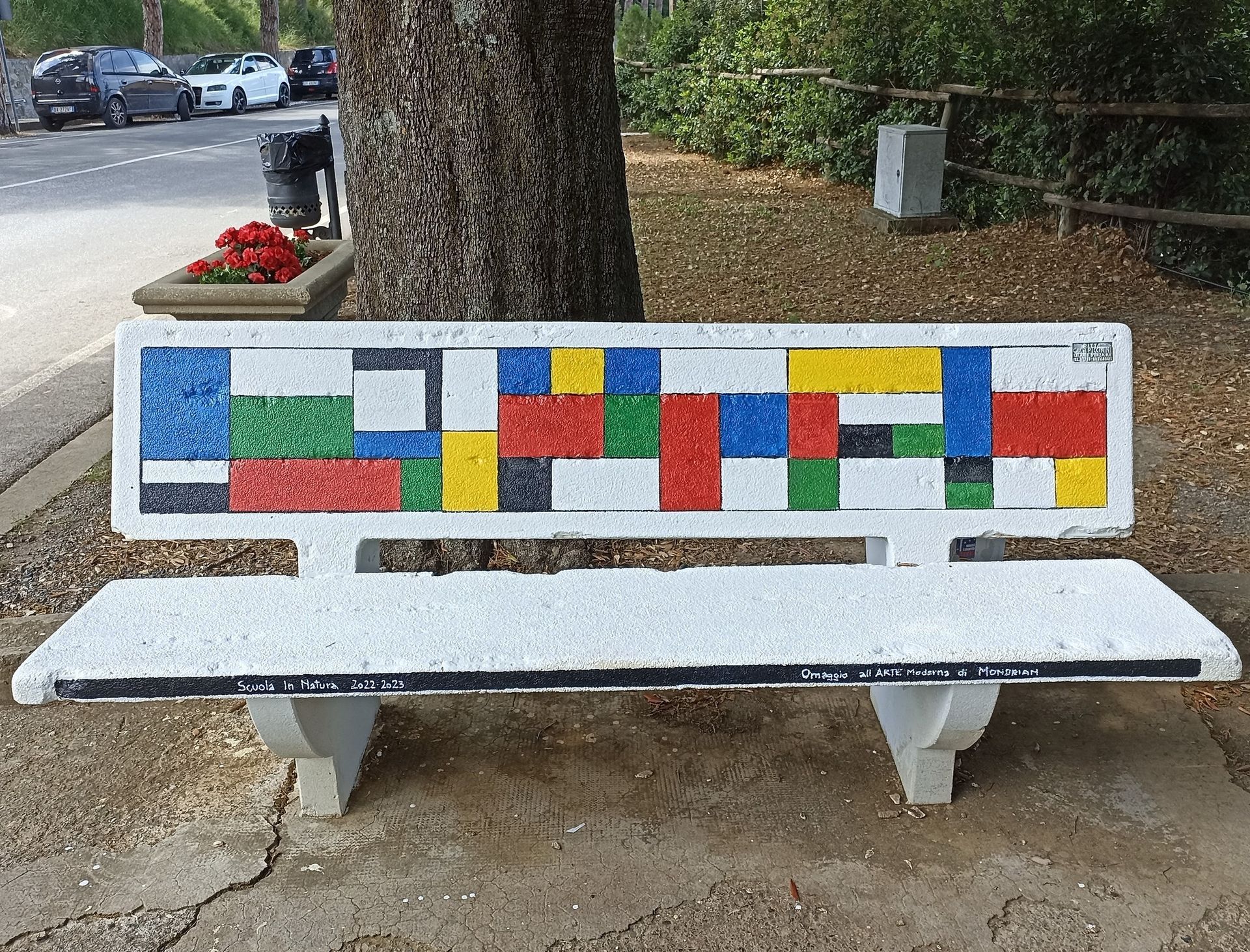
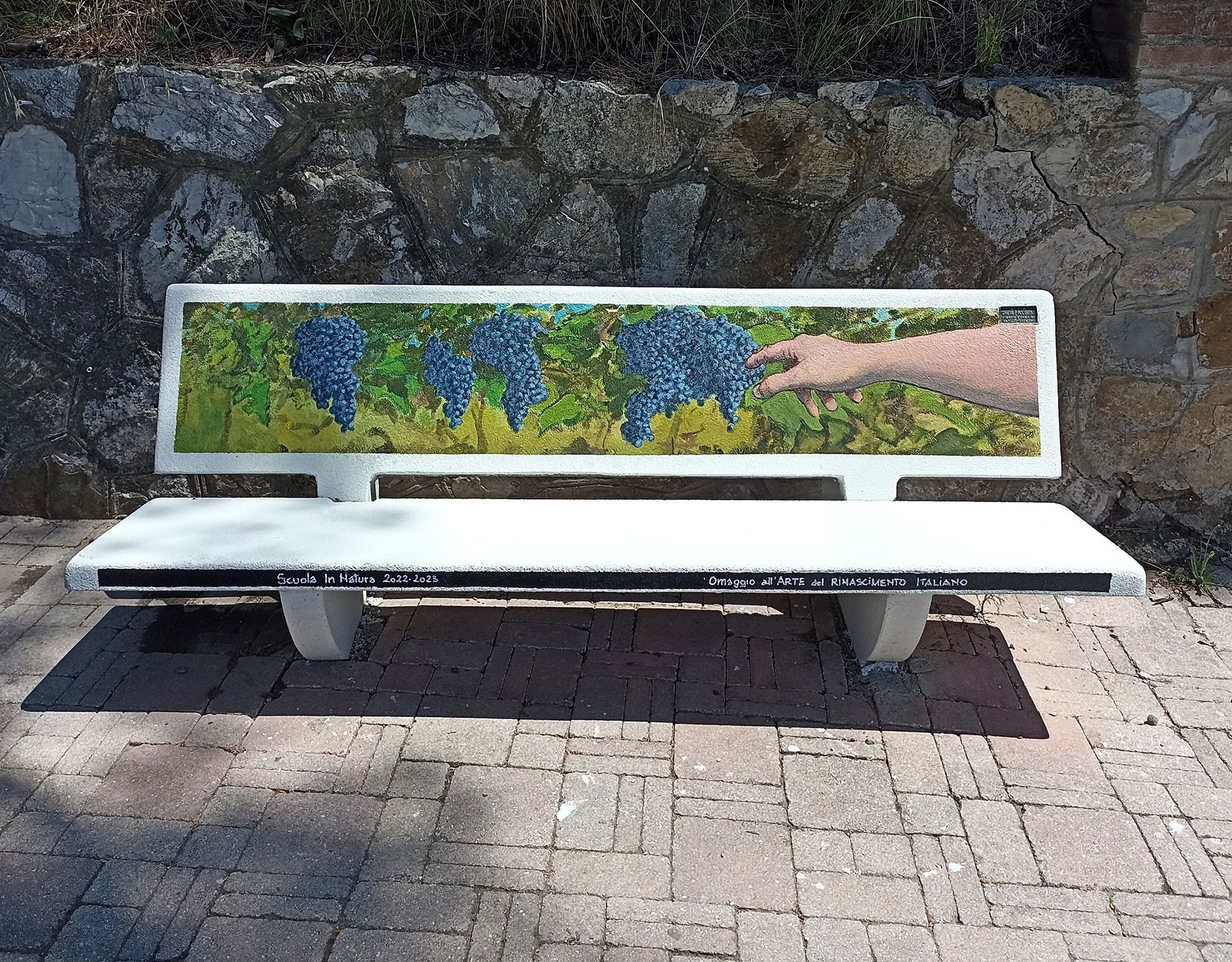
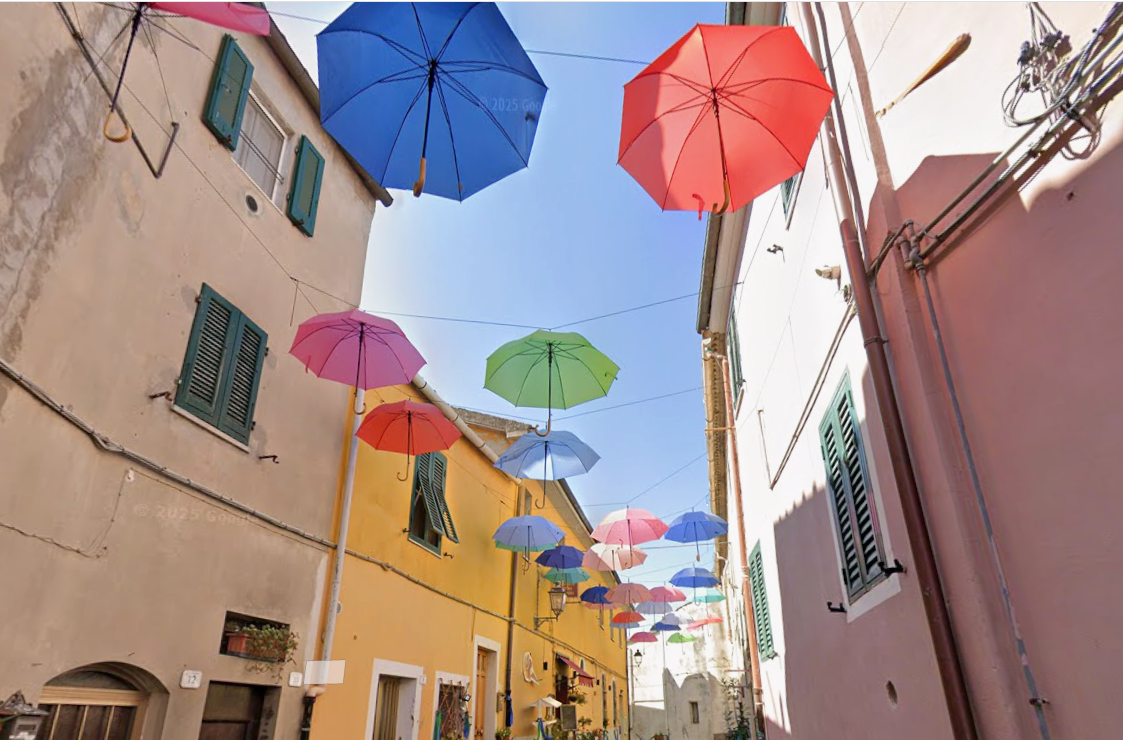
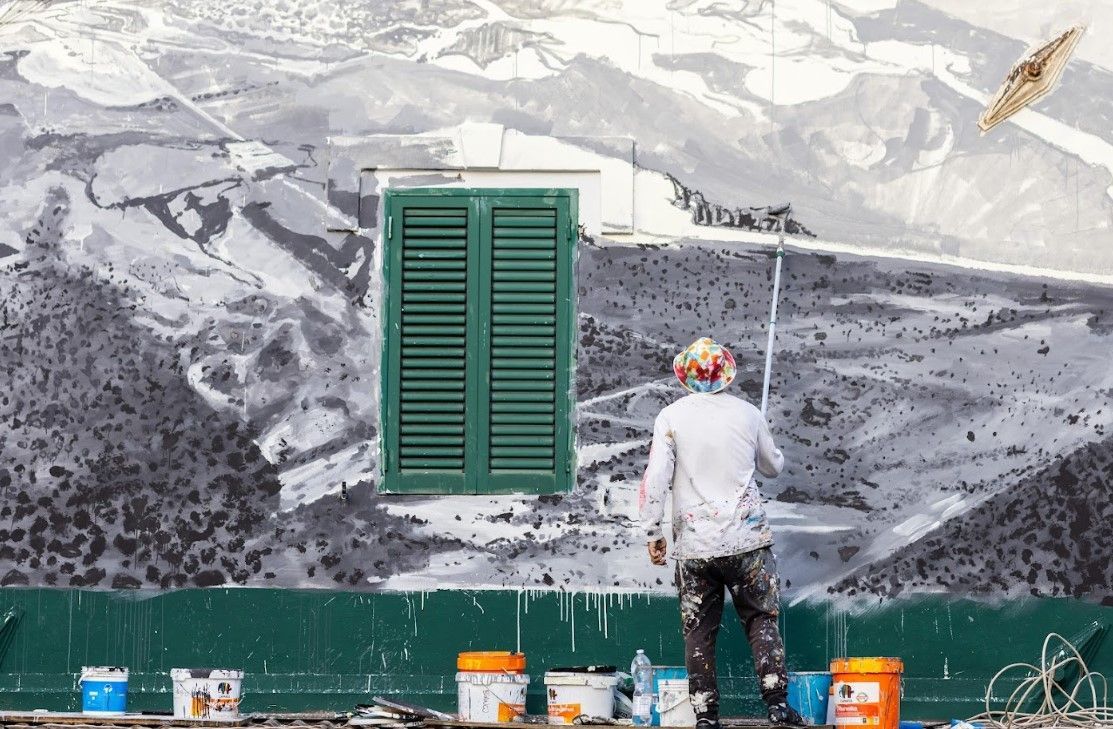
Anyone who comes to Riparbella for the hills and the trails soon discovers that the town has a great deal more to show. Among the alleyways of the old town art has become part of the everyday landscape: murals, painted frames, painted benches.

Then there are the places that speak of a very particular identity: a niche perfumery that came from New York and chose this town as its home, and a monumental cemetery that is, to all intents and purposes, a work of art and a national monument.

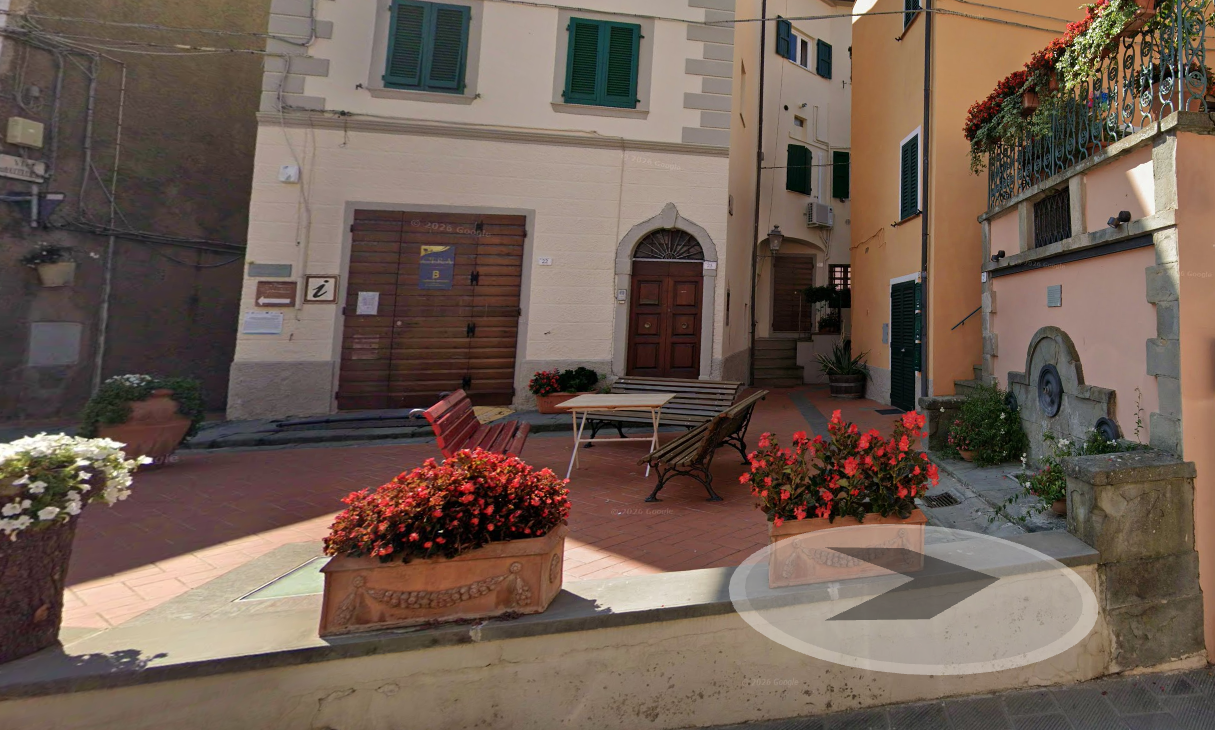
And then there is the town itself, square by square : the sixteenth-century oratories, the parish church, the medieval streets, the springs beneath the paving, the monuments of remembrance.

Loading the map of the town…
The map is open full screen.
The map failed to load. Try reloading the page.
Riparbella the map of the town and its countryside
Tap a category above: the map adjusts and the list opens

An interactive map, opened on the places to see. Tap a marker for its card, the distance from the centre and directions in Google Maps; with the filters at the top you can switch to the murals, the wineries, the car parks and the trails. The scroll wheel zooms after a click inside the map, so the page scrolls normally.

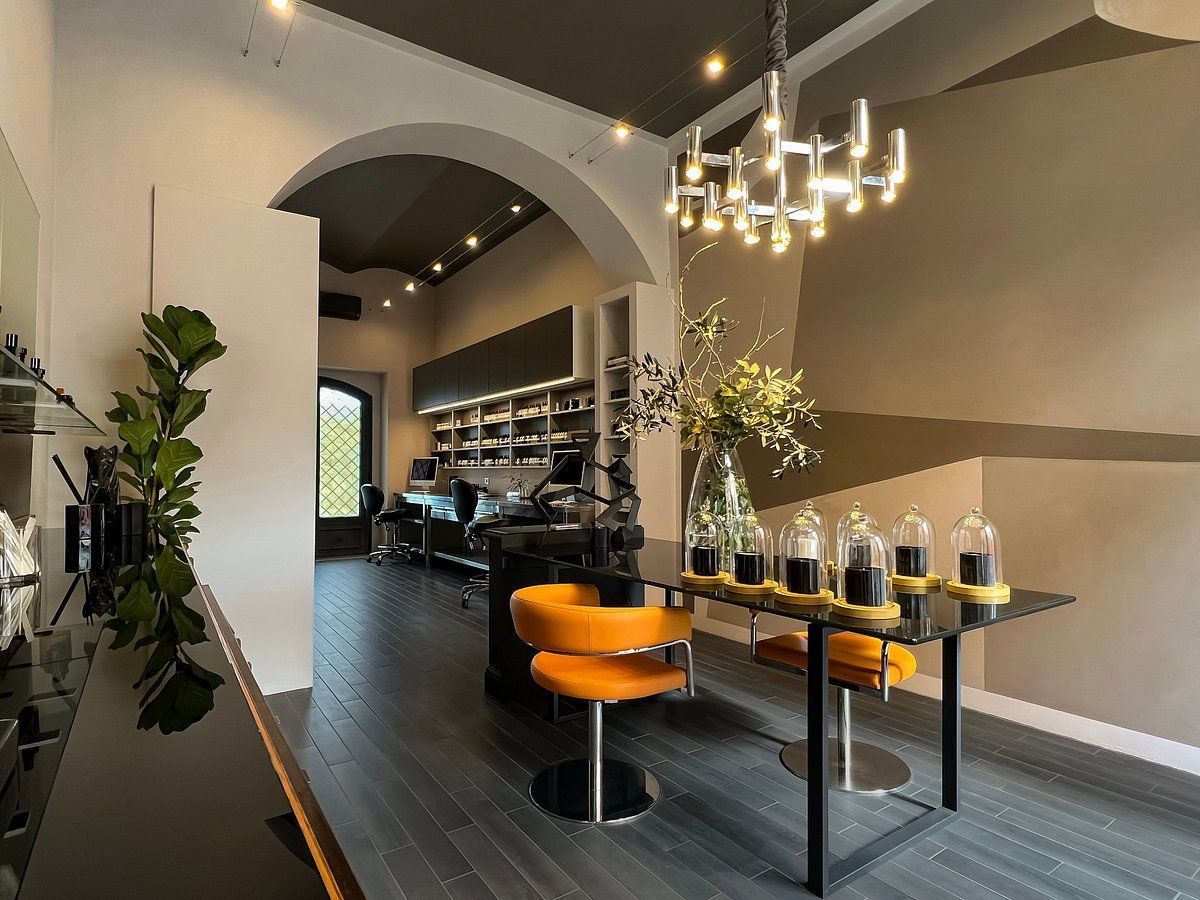
Adage perfume studio in Riparbella
Source Adage Add your image here
Niche perfumery · Craft

Source Adage,
perfume studio

A niche perfume boutique founded in Hudson, New York State, and moved to Riparbella with a motto that says it all: “Born in New York. reMade in Italy”. It was created by the perfumers Christopher Draghi and Robert Dobay, who chose to go against the grain of the more commercial destinations.

The studio occupies the ground floor of an elegant eighteenth-century Tuscan townhouse : thousands of bottles of raw materials, steel workbenches and a rare glimpse into the perfumer’s craft. The fragrances, all unisex, carry names in Native American languages and are joined by hand-poured candles and diffusers in the studio’s signature ten-sided glass with the word “adage” in relief.

The space is open to visitors and you can buy on site; on request you can join workshops , from making scented candles to an introduction to the art of perfumery.

2014 Founded
Via XX Settembre 36 Address
Every day Opening
The story of the studio
The Bellincioni monumental cemetery of Riparbella
Architecture · Memory

The monumental cemetery

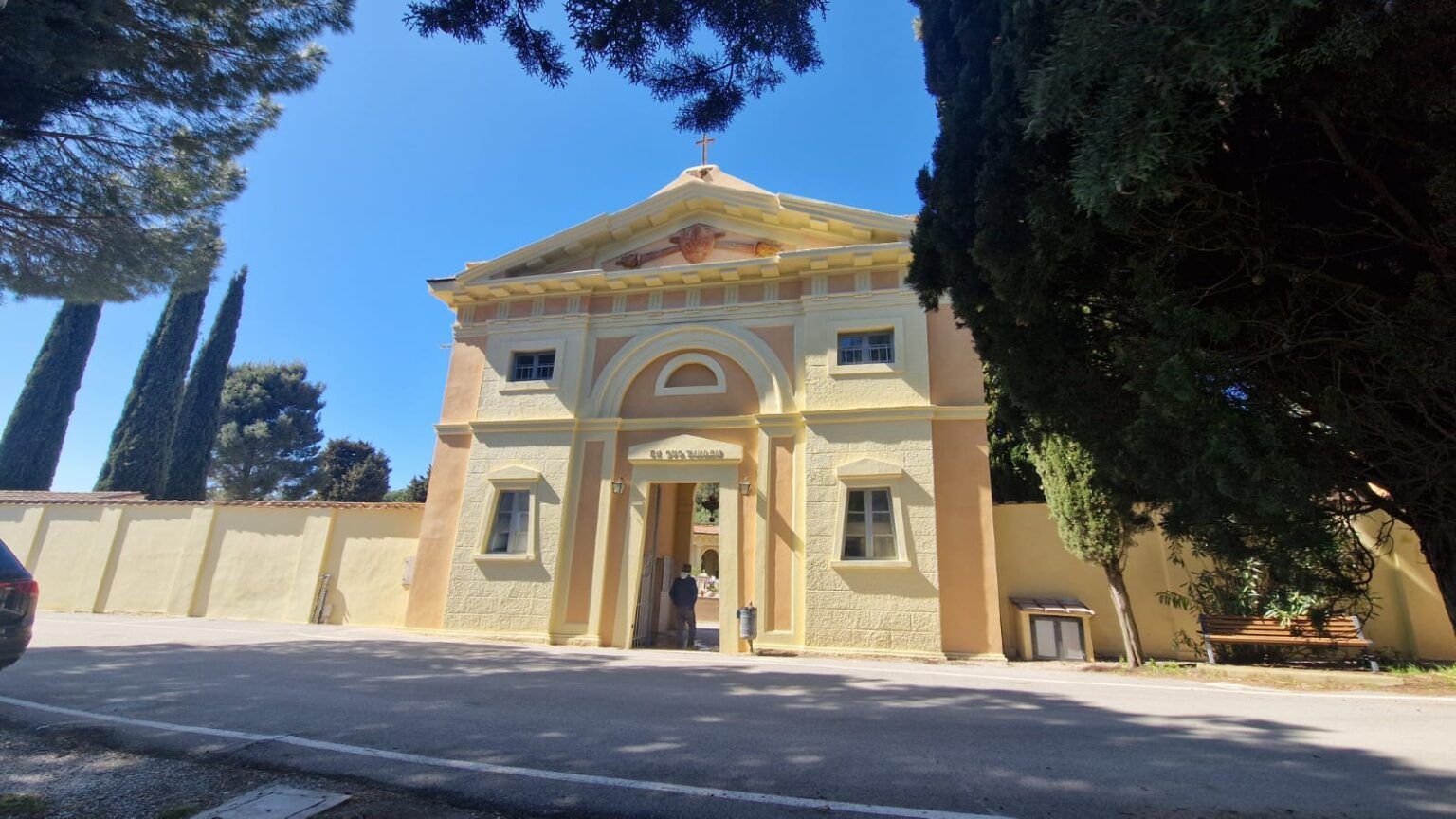
Just outside the town, along the road towards Castellina, is one of the most moving places in Riparbella: the Bellincioni monumental cemetery , declared a national monument in 1989. It is an early work by the architect Luigi Bellincioni, designed in 1884 and completed in 1894.

The doorway on the façade echoes the shape of the jambs of Etruscan tombs and is crowned by the Florentine lily with two torches pointing downwards, an ancient Etruscan symbol of death. Beyond the entrance opens a majestic neoclassical portico that embraces the burial ground in a semicircle.

The work was left unfinished — in the design the arcades were meant to close the full circle — and it is precisely those open sides that give it an atmosphere of rare spirituality. Under the portico, opposite the entrance, stands the chapel, which takes up the motif of the Etruscan jambs; on either side are the mortuary chambers, the municipal niches and the chapels of the town’s most influential families. Trail no. 1 also passes by, “Ripa Bella”.

A building site that lasted thirty years, begun in 1887 and never truly finished, and in recent years the subject of a restoration programme funded by the Tuscany Region. The full story is in the page devoted to it.

1894 Completion
1989 National monument
L. Bellincioni Architect
The story of the cemetery
C’ERA, the Centro Espositivo Riparbella Antica
Culture · Archaeology

The library and C’ERA

In Piazza del Popolo, since 8 March 2025 the municipal library has also been a museum: its rooms are home to C’ERA — Centro Espositivo Riparbella Antica , whose name is an acronym of Cultura, Esperienza, Ricerca, Archeologia (culture, experience, research, archaeology).

It displays some fifty Etruscan finds from the site of Belora , the ancient settlement of the Volterra area above the river Cecina, and above all the Hellenistic gold funerary crown, reassembled by the Superintendency almost forty years after its discovery and shown here for the first time.

The library, run by the Microstoria cooperative, is part of the Bibliolandia network and offers book loans, support for students, educational workshops and free courses for residents. Museum and library share the same opening hours, which change with the seasons.

8 March 2025 Opening
~50 Finds on display
Free Admission
Opening hours and contacts The C’ERA collection
Squares, streets, churches, monuments

The town,
place by place.

Thirteen stops inside the old town, in walking order: you start from Piazza della Madonna and go down as far as the park of San Rocco. At the end, two places that lie outside the town. Every place has its own page, with the full story.

The mechanical nativity scene of Riparbella
Mechanical Nativity Scene Photo 4
Piazza della Madonna

The mechanical nativity scene

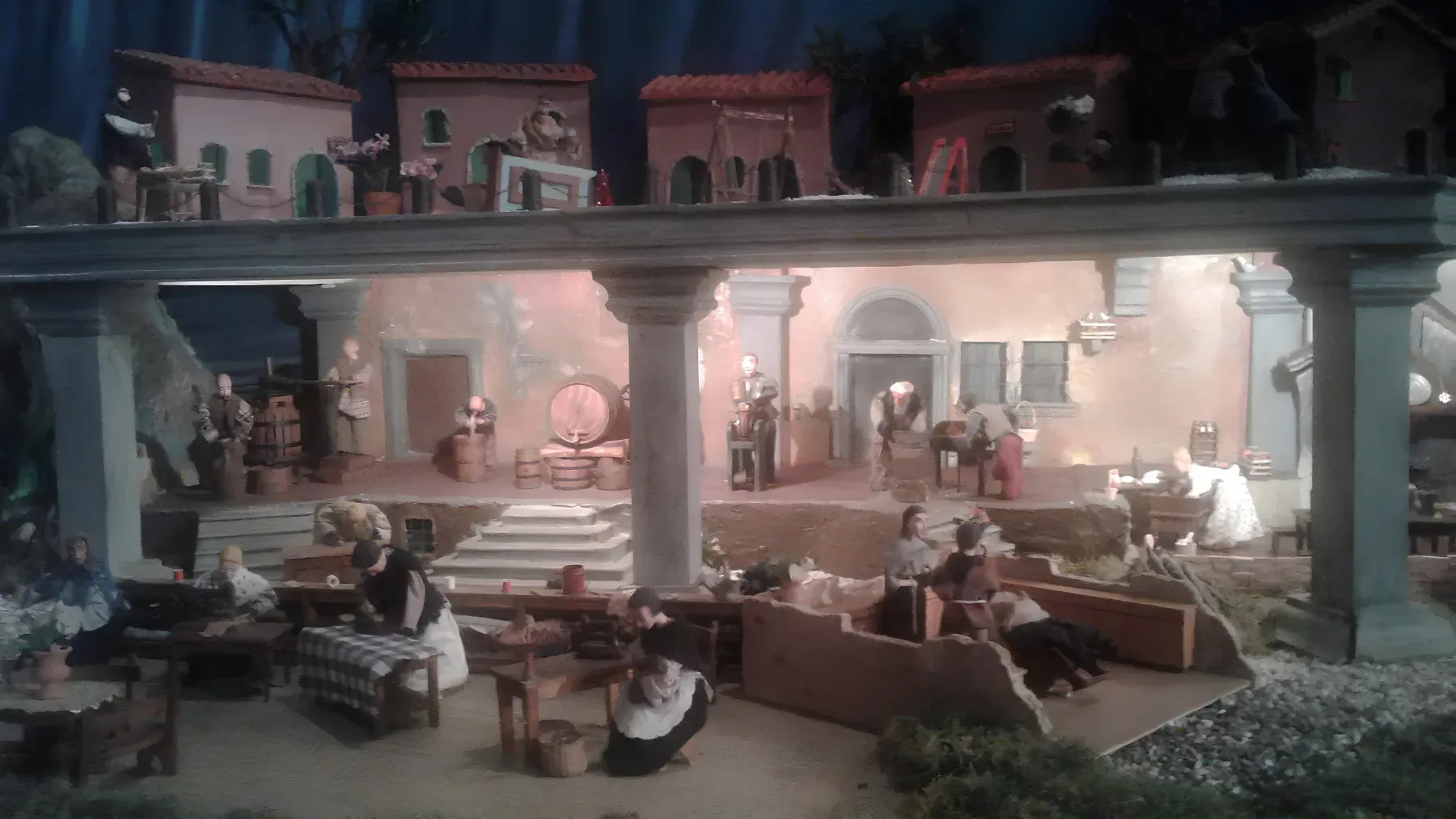
In the former oratory of the Compagnia della SS. Annunziata, built in 1502, Riparbella’s mechanical nativity scene is on display: around 80 square metres of biblical landscape with more than 140 figures moved by electronic mechanisms, hand-made by the townspeople, who add some new detail every year.

Discover the place
1502 The oratory
80 sq m Area
140+ Moving figures
Oratory of the Madonna delle Grazie
Madonna delle Grazie Photo 5
Piazza della Madonna

Oratory of the Madonna delle Grazie

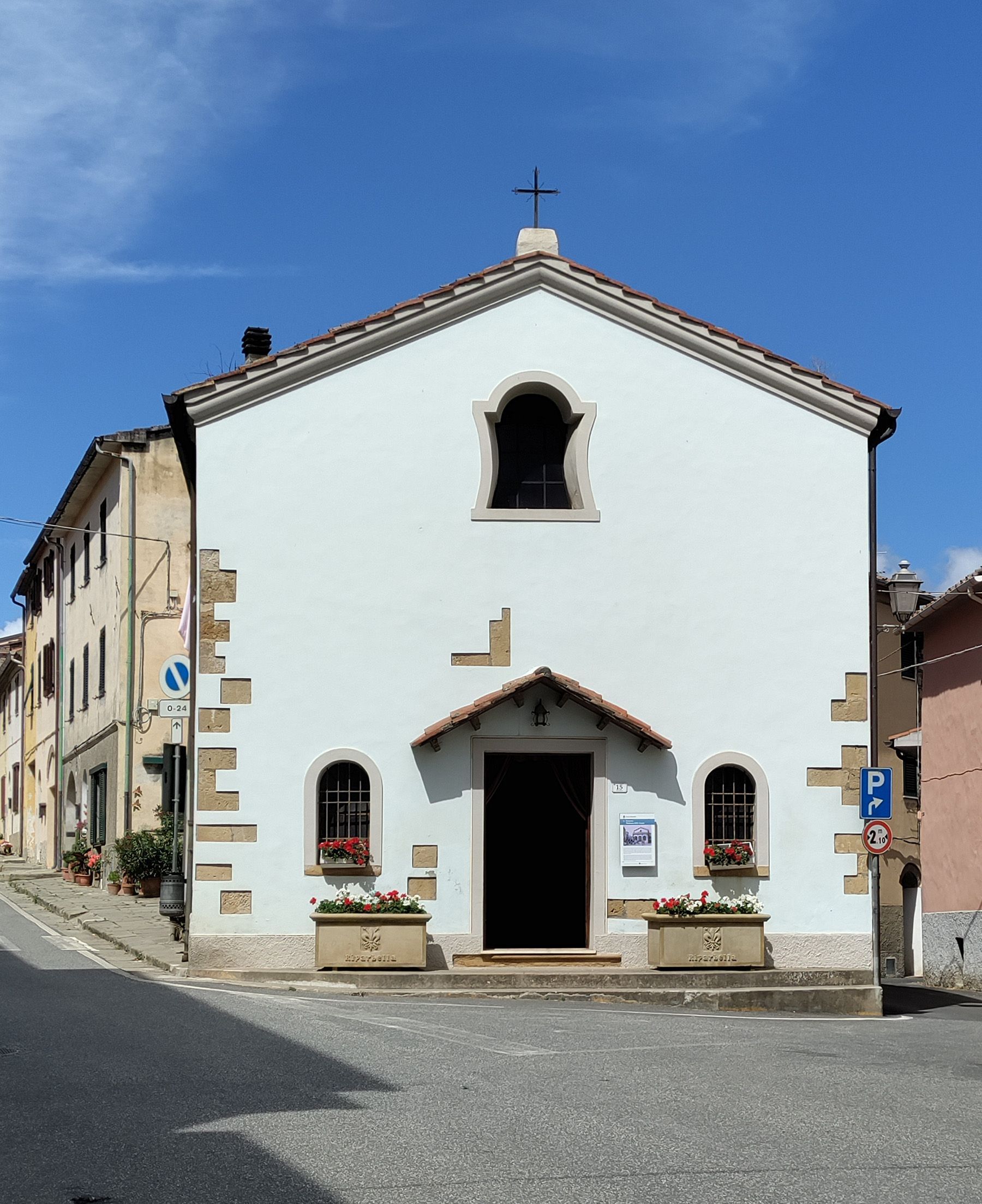
Built in 1542, it has a gabled façade in plastered stone and a bell gable with a bell bearing the date 1507. Inside, on the nineteenth-century altar, is an old fresco of the Madonna delle Grazie.

Discover the place
1542 Built
1507 The bell
War memorial of Riparbella
War Memorial Photo 6
Piazza della Madonna

The war memorial

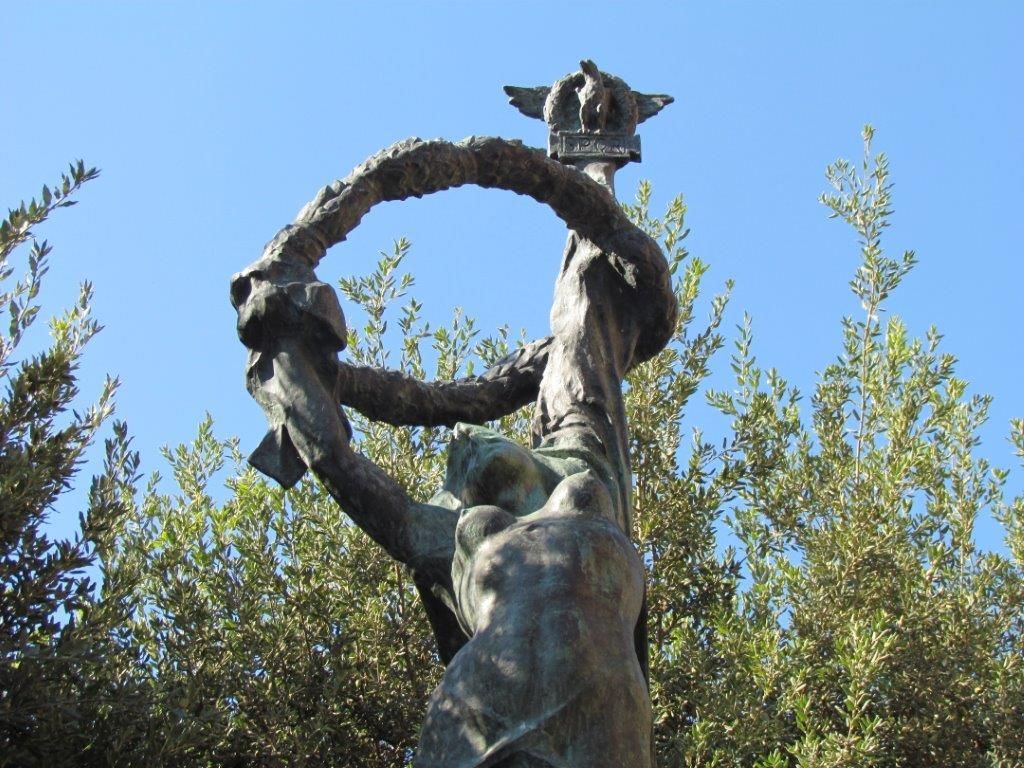
A bronze monument dedicated to the fallen of the First World War, with a commemorative plaque for those of the Second as well, by the sculptor Ezio Ceccarelli. From the square there is a beautiful view towards the sea.

Discover the place
1923 Made in
E. Ceccarelli Sculptor
Parco della Memoria, monument to the Le Marie massacre
Parco della Memoria Photo 7 · 8
Via Roma · Podere Le Marie

The Le Marie massacre

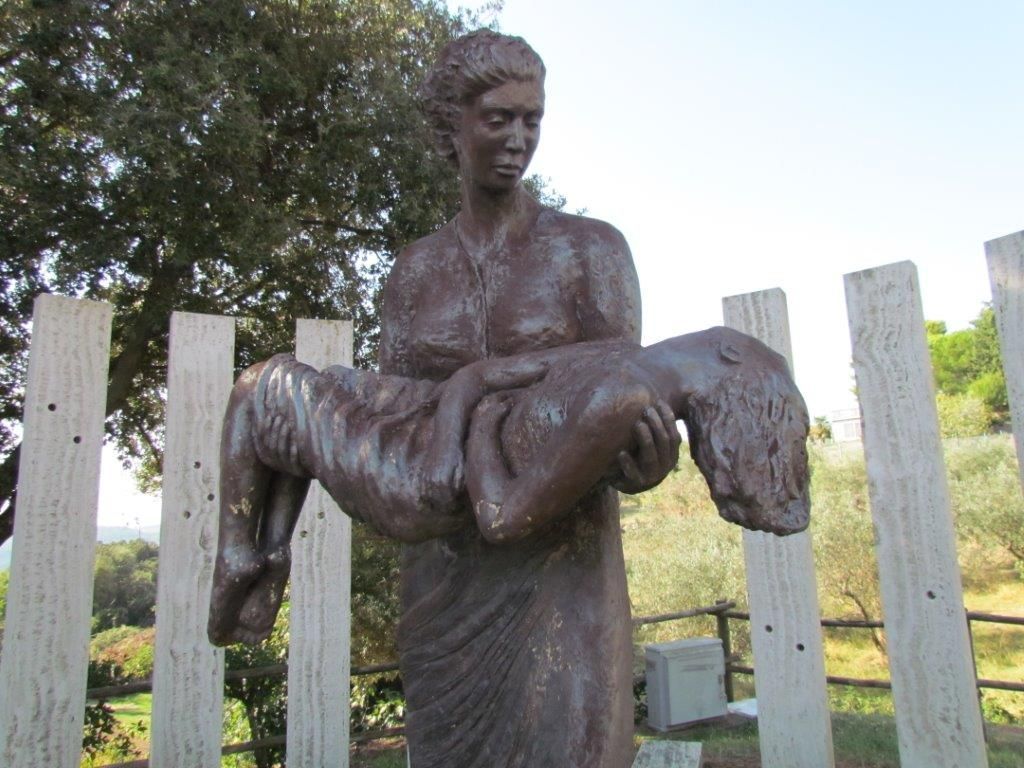
On 25 June 1944, at the Le Marie farm, seven people were killed by men of the Reichsführer-SS. Riparbella has dedicated to them a Parco della Memoria in Via Roma , with a monument by the sculptor Ferdinando Cerri, and a memorial stone on the site of the massacre.

Discover the place
25 June 1944 The massacre
12 Victims in the municipality
Via di Piazzetta in Riparbella
Via di Piazzetta Photo 9
Old town

Via di Piazzetta

Probably the oldest core of the town : around the sixteenth century the “castle” of Riparbella was nothing other than the Borgo. The houses along this street belonged to the Baldasserini family, with an olive mill attached.

Discover the place
1580 Nine houses, the archive
16th century The “castle”
The Palazzo Civico of Riparbella
Palazzo Civico Photo 10
Piazza del Popolo 1

The Palazzo Civico

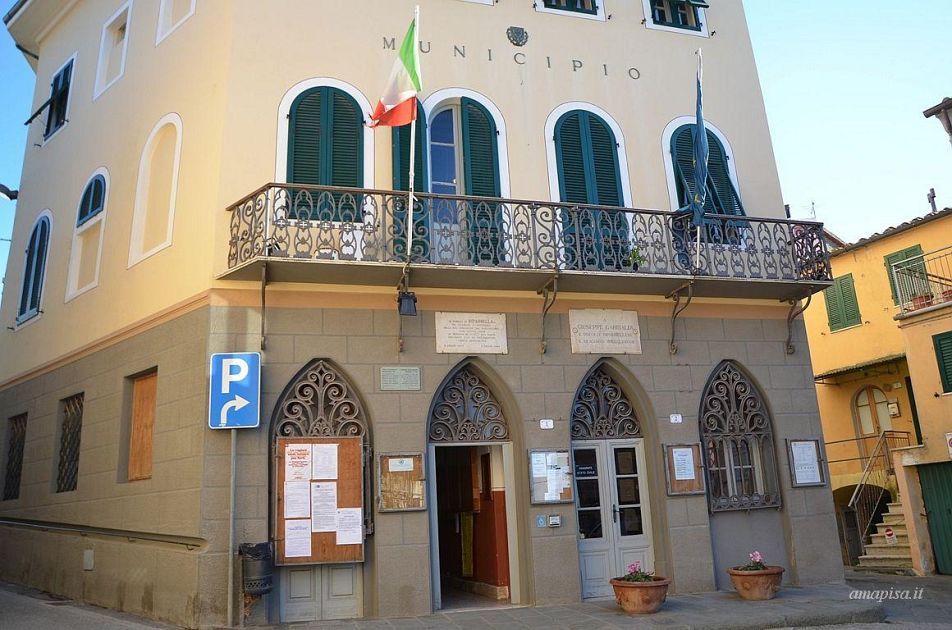
Built around 1866 to give the municipal archive and council meetings a home at last, as they had been held in private houses. A few small hovels stood on the site and were pulled down for the purpose; the square’s clock was moved onto the little tower of the building.

Discover the place
1866 Built
1993 Restoration
Piazza del Popolo in Riparbella
Piazza del Popolo Photo 11
Old town

Piazza del Popolo

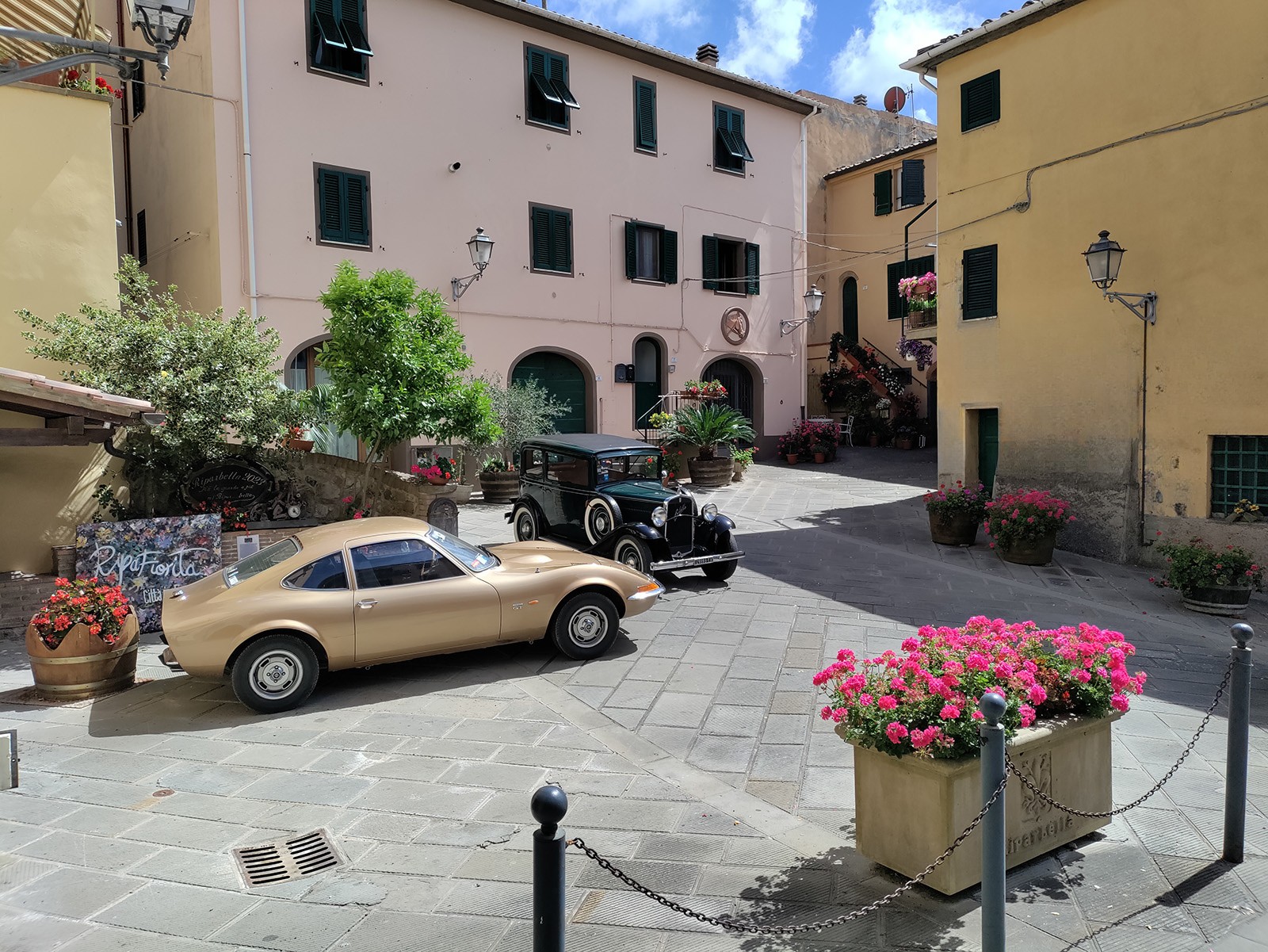
The town centre, with its main spring. Beneath the paving lie the remains of the great cistern of 1636 , built at the behest of the Marquis Carlotti: of the old spring the three spouts survive, and water still runs from them.

Discover the place
1636 The cistern
1484 The farm
1858 Drinking water
The rughette alleyways of Riparbella
Uccelliera and Caldanella Photo 12
Borgo di Mezzo

Via dell’Uccelliera and Via di Caldanella

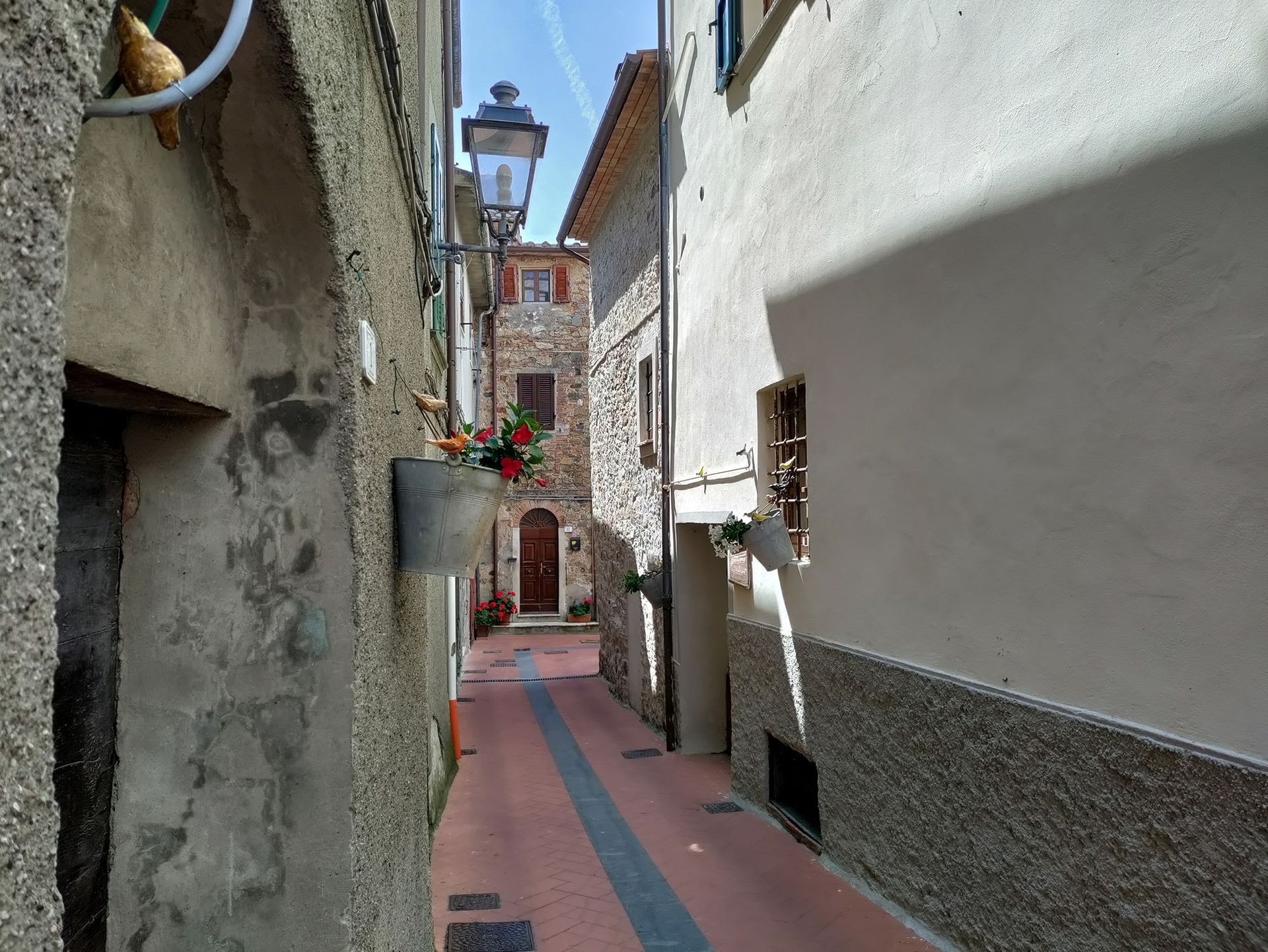
A cluster of houses already inhabited in the fifteenth century, which grew up around the church and outside the castle. Traces of its history survive in the medieval streets , with external staircases and underground passages.

Discover the place
15th c. First settlement
9 and 5 The houses in the 1400s
Church of San Giovanni Evangelista
San Giovanni Evangelista Photo 13
Via XX Settembre 11

The church of San Giovanni Evangelista

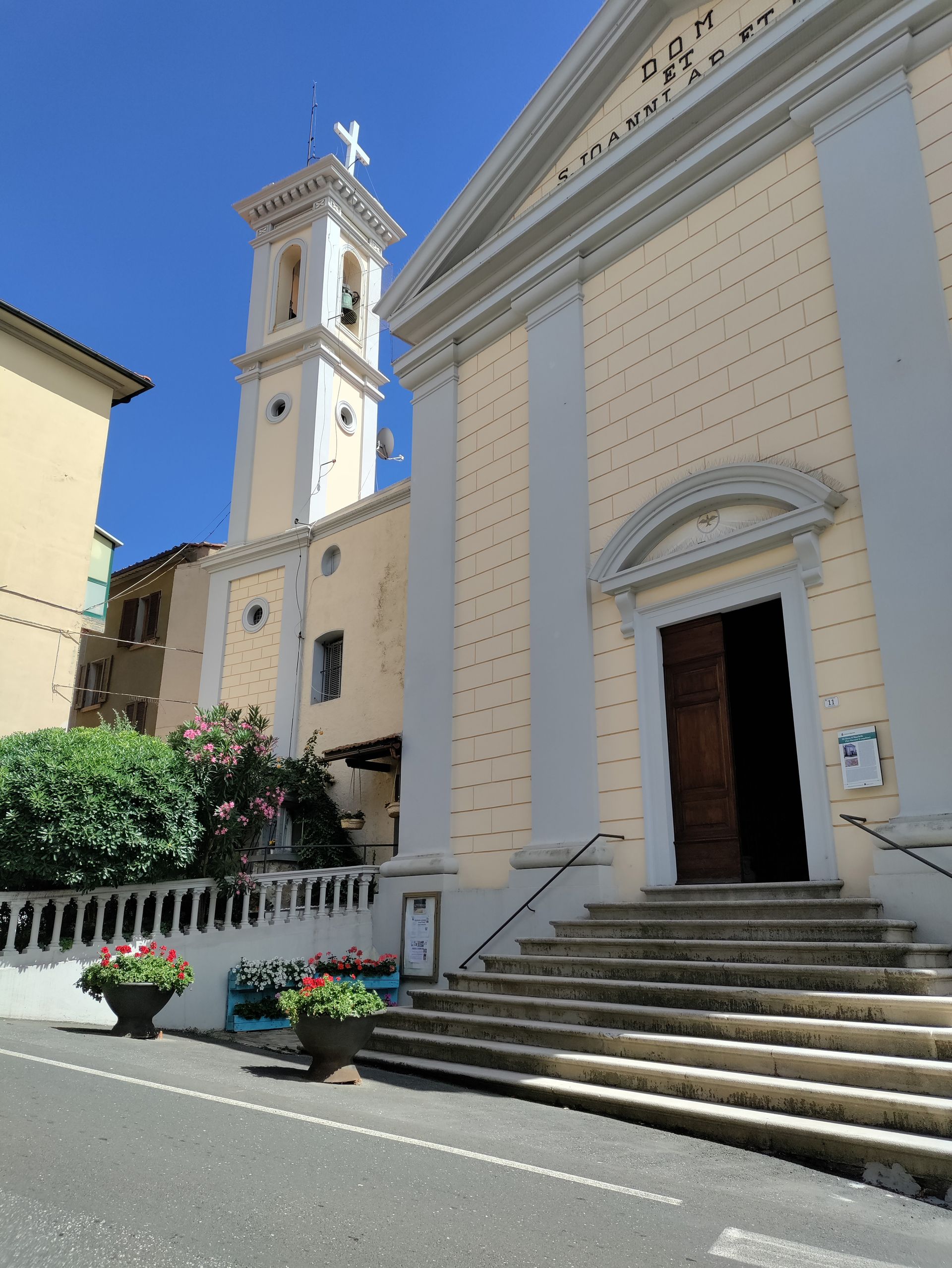
The church of the patron saint. The present one was built in 1841 by Grand Duke Leopoldo II in place of the old San Michele, of which only a stretch of wall survives between the bell tower and the left side. The bell tower dates from 1622.

Discover the place
1841 The present church
1622 The bell tower
1646 The holy water fonts
Piazza Borgo di Sotto
Borgo di Sotto Photo 14 · 15 · 16
Old town

Piazza Borgo di Sotto

One of the hamlets outside the castle, documented in the State Archive since the seventeenth century: twelve houses starting from Via della Noce. Today the square is home to the old eighteenth-century tower clock.

Discover the place
17th c. First documented
1700 The tower clock
Piazza Federico Baldasserini
Piazza Baldasserini Photo 17
Old town

Piazza Federico Baldasserini

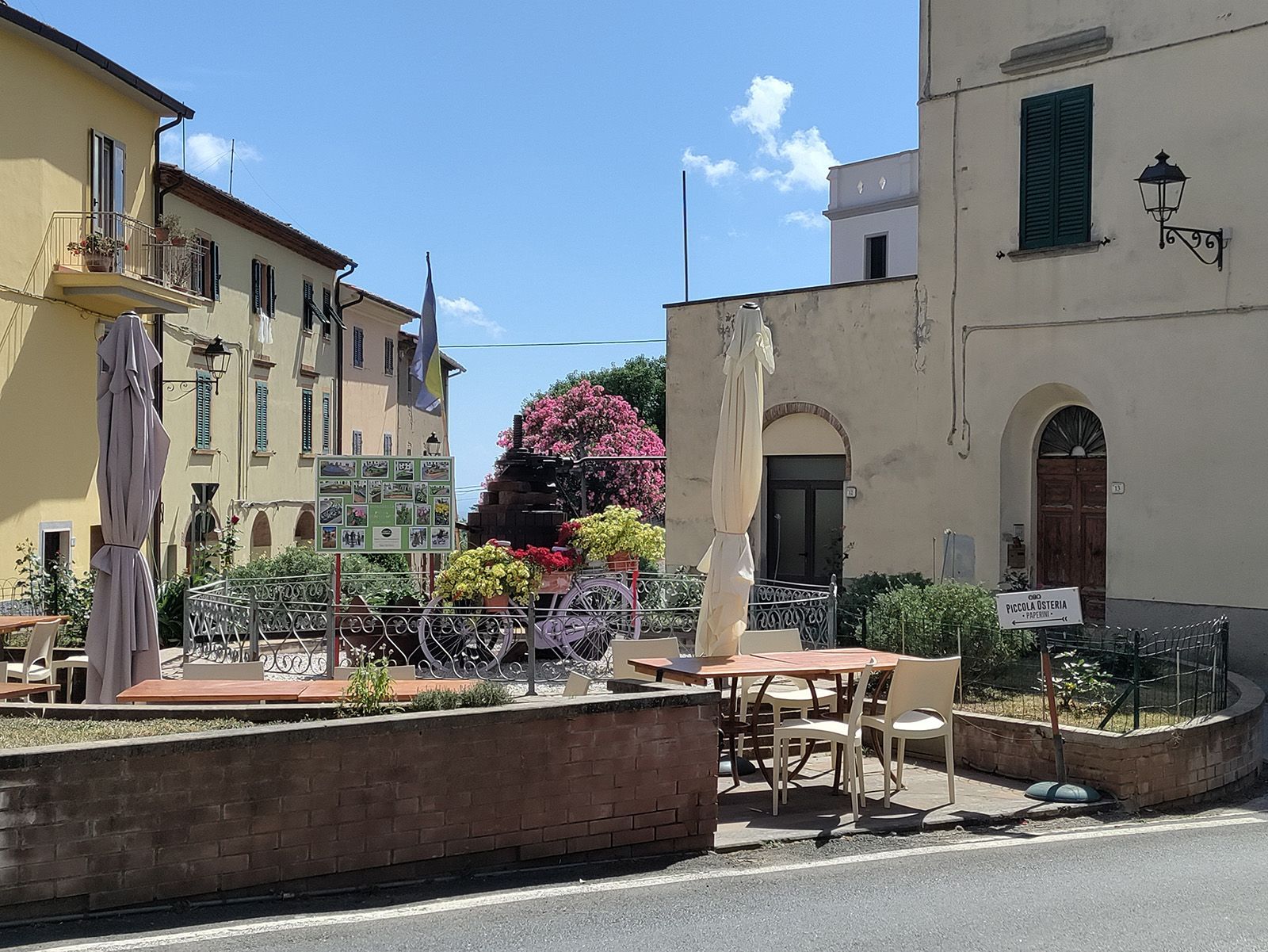
Created around the second half of the nineteenth century and named after the scion of one of the Pisan families with property in the town. Today it holds a raised garden bed tended by resident volunteers and has become the symbol of the “Adotta Riparbella” project.

Discover the place
Mid-1800s The square is created
Adotta Riparbella The project
The tabernacle of San Rocco
San Rocco Photo 18 · 19
Via Chiannerina

The park and tabernacle of San Rocco

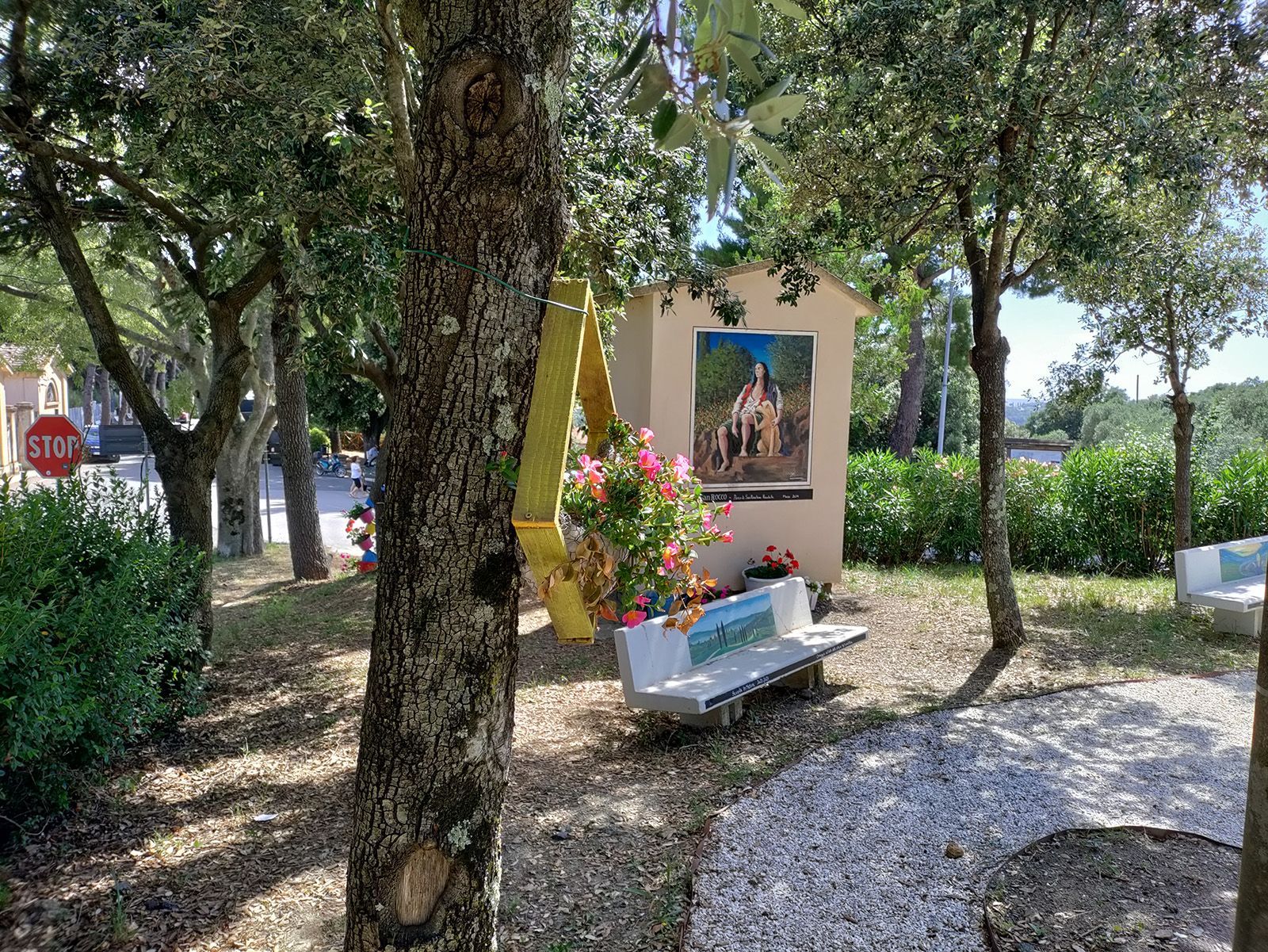
Where the SP 13 forks towards Castellina Marittima there still stands a tabernacle dedicated to San Rocco, protector against the plague , today frescoed with a painting of the saint with his dog, by Vincenzo Marano Esposito.

Discover the place
late 1600s The chapel
1858 The tabernacle
Belora Photo coming soon
The area · Archaeology

Belora, the Etruscan site

On the hill above the river Cecina stood an Etruscan settlement founded by Volterra, excavated in the nineteenth century and again in 1986. The site cannot be visited : the finds, and the golden crown, can be seen at C’ERA in the library.

See the finds at C’ERA
7th–2nd century BC Period
1986 Last excavation
No Open to visitors
The hills of Riparbella

«A hilltop town where art, crafts and memory
sit together as naturally as the landscape itself. »

Before you visit

Practical info.

Old town

Squares, streets and oratories

You can walk round them in half an hour, along with the artist benches between Piazza Monumento ai Caduti, Via Roma, Piazza della Madonna and the park of San Rocchino. Always open, free admission. The mechanical nativity scene can be visited over the Christmas period.

Source Adage

Perfume studio

Via XX Settembre 36. Open every day ; visits and purchases on site, workshops on request. Info: ciao@sourceadage.it.

Monumental cemetery

Road to Castellina

At the entrance to the town on the Castellina side, on Via del Commercio. Accessible during the cemetery’s opening hours.

Info point

Pro Loco Riparbella

Piazza del Popolo. Maps of the murals, guided tours and information about the trails. Saturday 3.30–5.30pm, Sunday 11am–12.30pm and 3.30–5.30pm. Tel. 333 1691023.

Library and C’ERA

Piazza del Popolo

Seasonal opening hours, free admission. Tel. 0586 696052. The up-to-date calendar is on Bibliolandia.

Mechanical nativity scene

Piazza della Madonna

It can be visited over the Christmas period: it traditionally opens on the evening of 24 December and stays up until the beginning of February.

Municipality of Riparbella

Town Hall

Piazza del Popolo 1. Tel. 0586 697111. Offices and home of the municipal archive.