

Docu fiabe
The documentary about La Collina delle Fiabe: the project that since 2018 has turned the façades of Riparbella into an open-air museum.
Watch on YouTube
Thirteen large murals signed by twelve Italian and international artists, painted on the walls of the old town between 2020 and 2025. An open-air museum promoted by the Municipality of Riparbella and curated by Start Attitude.
La Collina delle Fiabe (“the hill of fairy tales”) is Riparbella’s street art festival: a project of urban, cultural and social regeneration that has turned the town into an open-air art museum.
The name comes from the many stories, some of them little known, held in this area: telling them and bringing them to life through the art of murals is the idea it all grew from. The project took shape in 2018 , when the Municipality of Riparbella, together with the StArt Attitude association and its president Gianguido Grassi, applied to a GAL Etruria public call for European and regional funding, which came through in 2023.
The festival returns every year on the last weekend in September, and every year the town gains new works and installations.
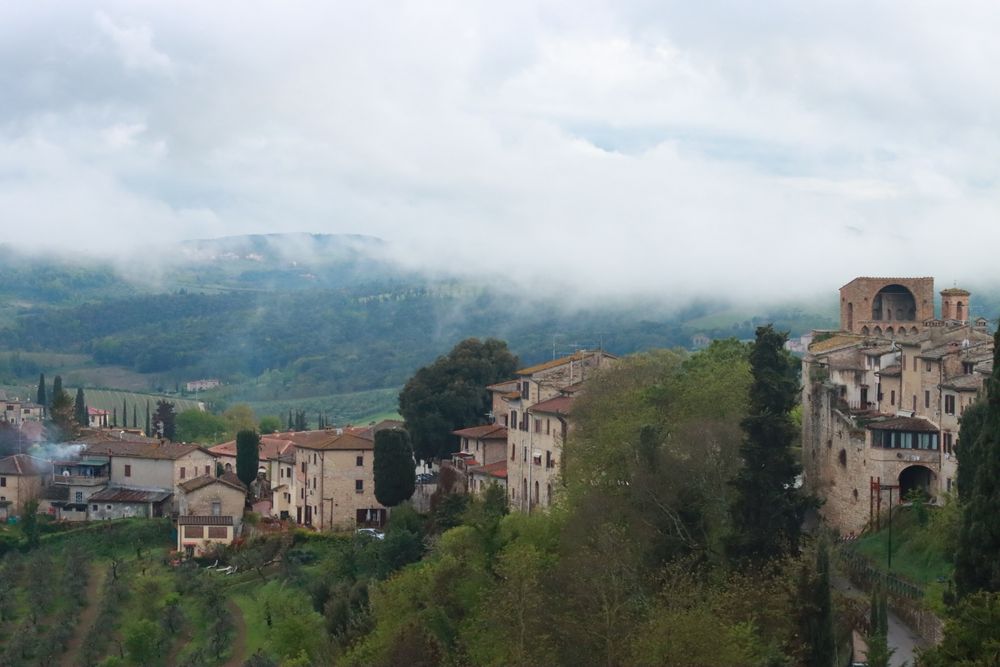
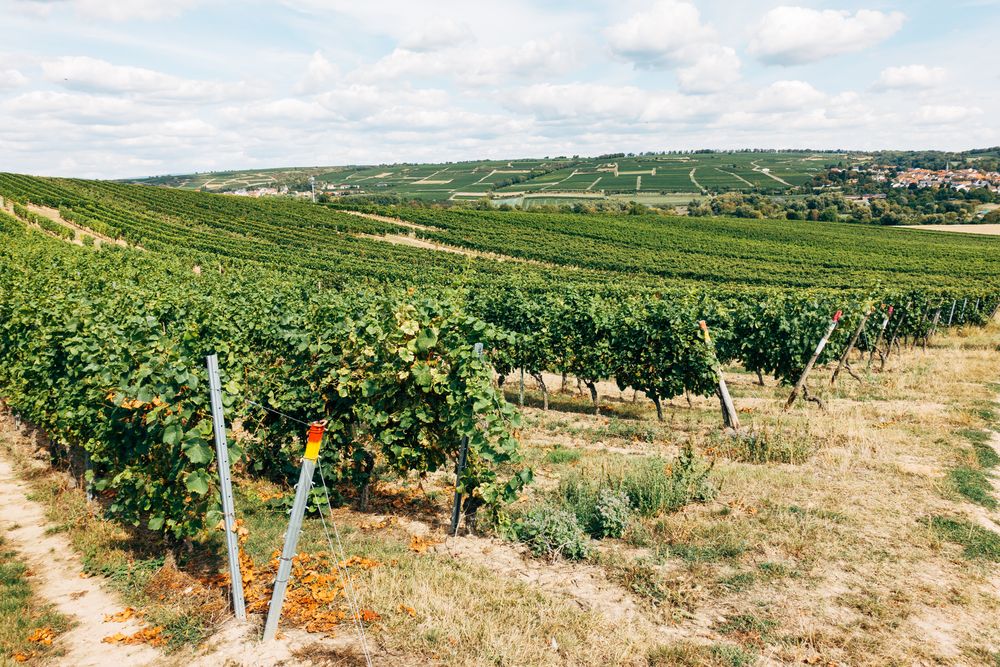
A medieval hilltop town stretched along a ridge of white tufa at 216 m above sea level, in the province of Pisa, between the Val di Cecina and the Etruscan Coast. It grows in a line along the ridge — not on a circular plan like the neighbouring towns — with 13 murals in the old town, nine wineries in the countryside and around 65 km of green trails.
| By car | Exit at Cecina Nord on the SS1 Aurelia / Variante Aurelia, then SP 13 del Commercio . Cecina 10 km (15′) · Livorno 50 km (45′) · Pisa 65 km (55′) · Volterra 35 km (40′) · Florence 130 km (1h 45′). |
| By train | The nearest useful station is Cecina , on the Pisa–Rome Tyrrhenian line; from there you continue by bus, taxi or hire car. The Cecina–Saline di Volterra railway is not in service and is replaced by buses: the San Martino stop is therefore not a useful arrival point. |
| By bus | Riparbella is served by regional bus routes with their terminus in Cecina: up-to-date timetables and stops at at-bus.it. |
| By bike | Anello del Vino : 42 km and around 1,000 m of ascent taking in the nine wineries. Bike racks in the old town and e-bike charging points. |
You can walk across the town in a few minutes: leave the car in one of the car parks along the ridge. On the map they are marked with the letters A–I from south to north, and every card has a direct link to Google Maps.
There are 13 so far : every year, on the last weekend in September , the festival La Collina delle Fiabe adds new ones. They are painted by international artists working with residents and with the owners of the walls, and each one tells a story about Riparbella or is connected to the town in some way. You can see them all on foot in half an hour, all in the old town, along with the twenty hand-painted artist benches .
The project was started in 2018 by the municipal administration with the association StArt Attitude and funding from the GAL Etruria, with the idea of turning the town into an open-air contemporary art museum. You can follow the route on your own with the map from the tourist office, or join a guided tour led by volunteers.
Tourist office / Town Hall
Piazza del Popolo 1 · 0586 697111
Municipal pharmacy
Piazza Matteotti
Carabinieri
Riparbella, north side
Tourism portal
visitriparbella.com
| 25–26 April | Pianeta Ripa |
| May | Ripa Fiorita — flowers and tradition. From May, Via di Piazzetta becomes the street of coloured umbrellas |
| 24 June | Night of San Giovanni |
| July | Ripa Wine — wine and music |
| early August | Agrifiera |
| late August | RipaTalent |
| last weekend in September | La Collina delle Fiabe — street art festival: the new murals are created |
| November | Sagra del Cinghiale wild boar festival · Festival of Tradition and New Olive Oil |
| December – January | RipaChristmas and the Mechanical Nativity Scene |
Content from the Riparbella tourist office and the portal visitriparbella.com, data from the BiciInComune app and base mapping by OpenStreetMap. The car park locations are those given by the tourist office. Some points in the centre have a position estimated along the street from the house number: their card says so.
The murals are all in the old town and can be seen on foot in half an hour: the dotted line is the route that links them. Tap a marker for the artist, the year and directions in Google Maps.
Two films about the project: the documentary and the story of the 2025 edition.
The documentary about La Collina delle Fiabe: the project that since 2018 has turned the façades of Riparbella into an open-air museum.
Watch on YouTubeThe story of the 2025 edition of the festival, the one that brought works by Aris, Giorgio Bartocci, Hitnes, Tellas and Vesod to the town.
Watch on YouTubeThe works are presented in chronological order — from the first mural of 2020 to the most recent of November 2025 — and form a walking route through the old town. Photos: Caue Pintaudi (2024) and Leonardo Morfini (2025) for the Municipality of Riparbella.

The town’s first mural, in a classical style: a self-portrait of the Riparbella area through its landscape, its life and its community. It opens the path that would lead, years later, to the birth of the festival.

A mural on the road surface in comic-strip form: a game of the goose painted on the asphalt that tells the story of Agenda 2030 through the eyes of the primary school children. It runs along the street leading to the school.

The mural that opened the first edition of the festival, at the entrance to the town. A composition of shapes and colours by the Argentinian–Japanese couple, in which distinctive elements of Riparbella emerge: wine, characters and natural motifs.
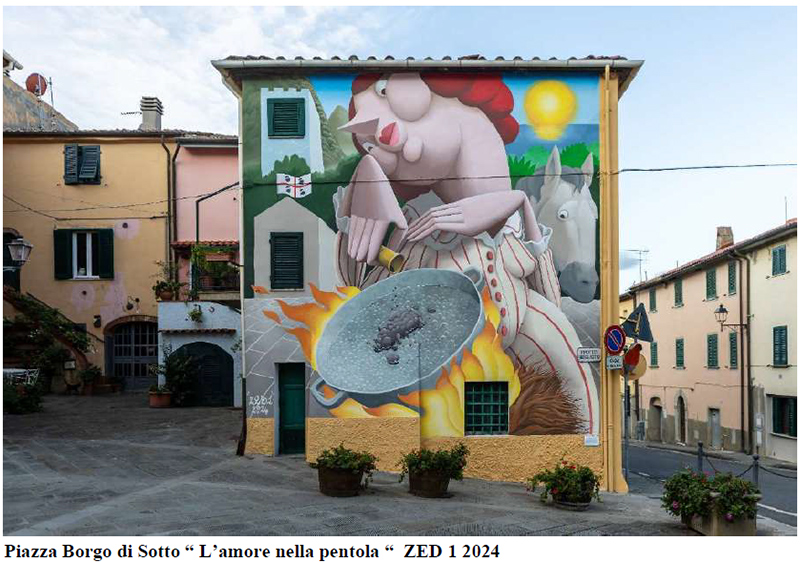
Inspired by a local tradition: on the night of San Giovanni, women would melt the lead shot from hunters’ cartridges in boiling water and read, in the shapes it set into, the trade of their future husband. In the pot painted by Zed1 there is also a wild boar, the town’s signature dish, and a Sardinian flag — the origin of the wall’s owner.

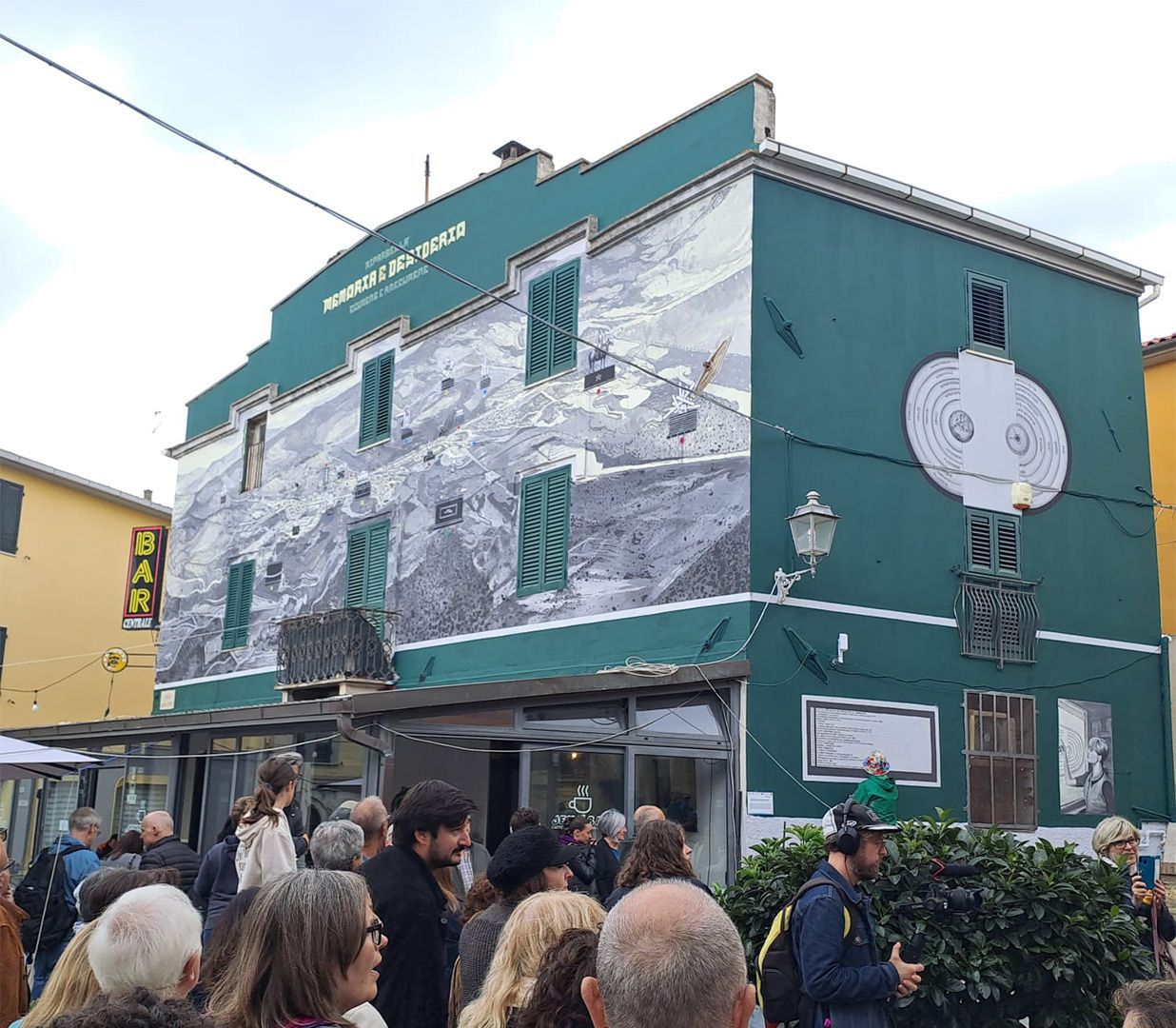
A great imagined map of the town, in green and grey, across the façade of the bar. It grew out of a participatory process with older residents and schoolchildren: benches as meeting places, the smell of wild boar in salmì, a partisan on horseback, but also the children’s wishes — the statue of a love of football, the outlet shop, peace. On the side wall, a key that measures emotional, political and social distances.

Facing Muñoz’s work, on the other side of the square, Gio Pistone answers with vivid colours, portraying the three Lares — Roman household gods — in open chromatic dialogue with the black and white of “Memoria e desiderio”. Piazza Matteotti thus becomes a gallery with two canvases.

A musical abstraction of shapes overlapping like rhythms and colours like notes, in the tradition of Kandinsky. The 1930 building housed Riparbella’s first school: for the occasion the Municipality named the square after the Riparbella tenor Gaetano Bardini. Moneyless was the only artist at the festival to work from a preparatory sketch, in agreement with the Superintendency.

Martellacci, originally from Riparbella and now working in Belgium in illustration, animation and film set design, came back to the town and involved the primary school children in designing the mural on the boundary wall, with the collaboration of Arianna Martucci. The result is at once urban regeneration and a teaching workshop.
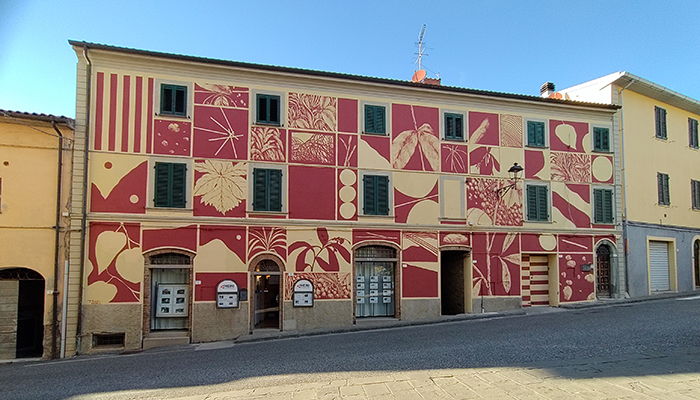
Olive trees and vineyards emerge from the very substance of the wall, in the two-tone aesthetic of Tuscan sgraffito. Tellas likens the amphora — the vessel that holds the memory of wine — to the wall itself, which holds the landscape and lets it surface. Created through the regional call “Tracce d’identità: murales partecipato tra arte e territorio”.

A tribute to the Etruscan gold funerary crown kept in the C’ERA museum. Bartocci takes up the swirling composition of Michelangelo’s Last Judgement: a circular movement that binds humanity together. The use of metals makes the surface come alive, changing with the light of the day.
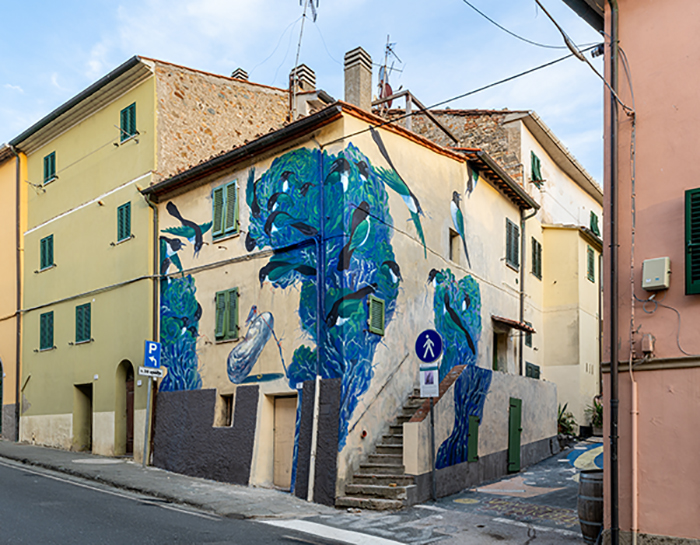
A robin at the centre of the scene, magpies circling it, a glittering ring hidden under a boulder. Hitnes turns the metaphor on its head — the hunter hunted — starting from the tales of “Riccardone”, a well-known local hunter and owner of the building that was painted.
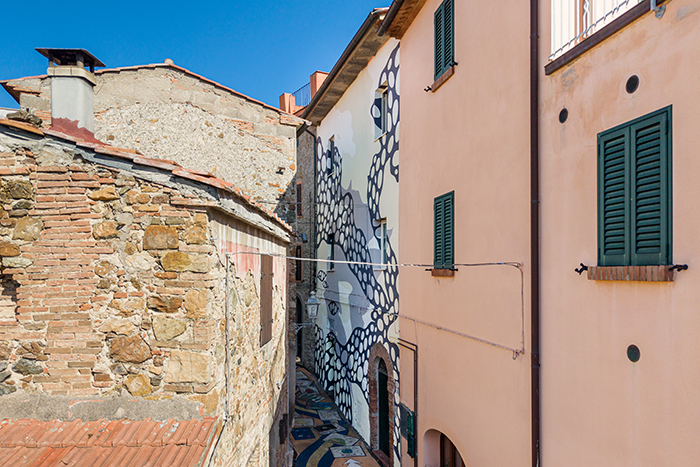
A tribute to Riparbella’s Etruscan origins and to the finds in the C’ERA museum, in particular the vases from the settlement of Belora. A homage to Grand Duke Pietro Leopoldo, who in 1768 bought the first Etruscan collection for the Uffizi. Co-funded by the regional call marking the Grand Duke’s 260th anniversary.
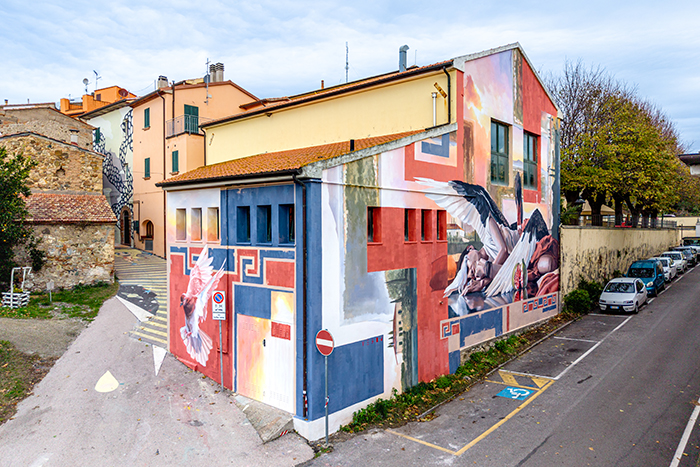
Turan, the Etruscan goddess of love and freedom, lying on her side, her profile merging with the hill of Riparbella looking out over the Tyrrhenian Sea. Beside her, the black swan, the pomegranate, the white dove. Painted in November 2025 for the 80th anniversary of the Liberation, thanks to a call by the Regional Council of Tuscany.
The third edition will be held on the last weekend in September, as every year. A week of artists’ residencies will precede the opening weekend: new murals, exhibitions, talks, workshops, music, the artistic wine trail through the wineries and Riparbella cooking by the Pro Loco.
«We chose the title La Collina delle Fiabe because of the many stories, some of them little known, held in our area and now told and brought to life through the art of murals.»
The project began in 2018, when, thanks to the collaboration with the StArt Attitude association and its president Gianguido Grassi, the municipal administration decided to apply to a public call by GAL Etruria for European and regional funding, which came through in 2023.
From the outset the project was conceived as a street art festival, bringing together the wish for urban, cultural and social regeneration in Riparbella and a public vision of art, open to everyone who contributes to turning the town into a contemporary art district and an open-air art museum: to spread it through the streets, share it and live with it. There were five main aims:
It is precisely these aims that have rooted the festival so well in the historical, cultural, artistic and religious life of the town, reviving its free, artistic spirit and its international outlook.
With the opening of the project, held on 6 October 2024 — with some artists still at work finishing and refining their murals — a great many side events were held, involving businesses, schools, residents and third-sector associations, promoting art in many of its forms (painting, screen printing, music) and the food and wine of the area.
It was the first in a series of festivals held every year on the last weekend in September in Riparbella, and each year the open-air art museum grows with new works and installations.
With the GAL funding obtained at the end of 2023, six murals were created, joining two others painted in 2020 and 2021 — one on a façade and one on the road surface — as well as the twenty artist benches made in 2023 in collaboration with the state middle school in natura.
All these works make up the first core of Riparbella’s open-air art museum, which unfolds along the town, home of the Centro Commerciale Naturale. An art museum available to everyone at any time, and so a public expression of beauty at everyone’s service.
The artist benches reproduce, as a learning trail, works by a range of artists: from Impressionism to the avant-gardes of the twentieth century and on to more recent painters. The mural «La Gioia» (2020) is in a classical style, a true self-portrait of the Riparbella area. The road mural «Universo Riparbella» (2021) tells the story of Agenda 2030 in comic-strip form, along with a love of one’s town and one’s planet as seen by the primary school children, in a sort of game of the goose that runs along the road leading to the school (Via della Noce). The six new murals, finally, in different styles — from comic strip on the school’s boundary wall to modern figurative, abstract or symbolic work — tell the stories of the town, but also the soul, the memories and the future wishes of its people.
Contemporary art and culture are thus spread through the town and its streets, forming the historical and future identity that both visitors and residents need. All this has also brought urban regeneration, giving new life to old, neglected façades, restoring dignity to the town in a form that is artistic and appealing to visitors, creating new places to gather and revitalising public spaces that were previously anonymous.
On 28 and 29 September 2025 the second edition of La Collina delle Fiabe took place: another five murals were created thanks to the proceeds of the tourist tax and to contributions from Pro Loco Riparbella, the Tuscany Region and the Riparbella wind farm. Five internationally renowned artists painted on private and public façades, so that today Riparbella’s open-air museum has grown to a total of thirteen works of high artistic and expressive quality.
Project text: Municipality of Riparbella. The works are all in the old town and can be seen on foot: the map above shows the route that links them.